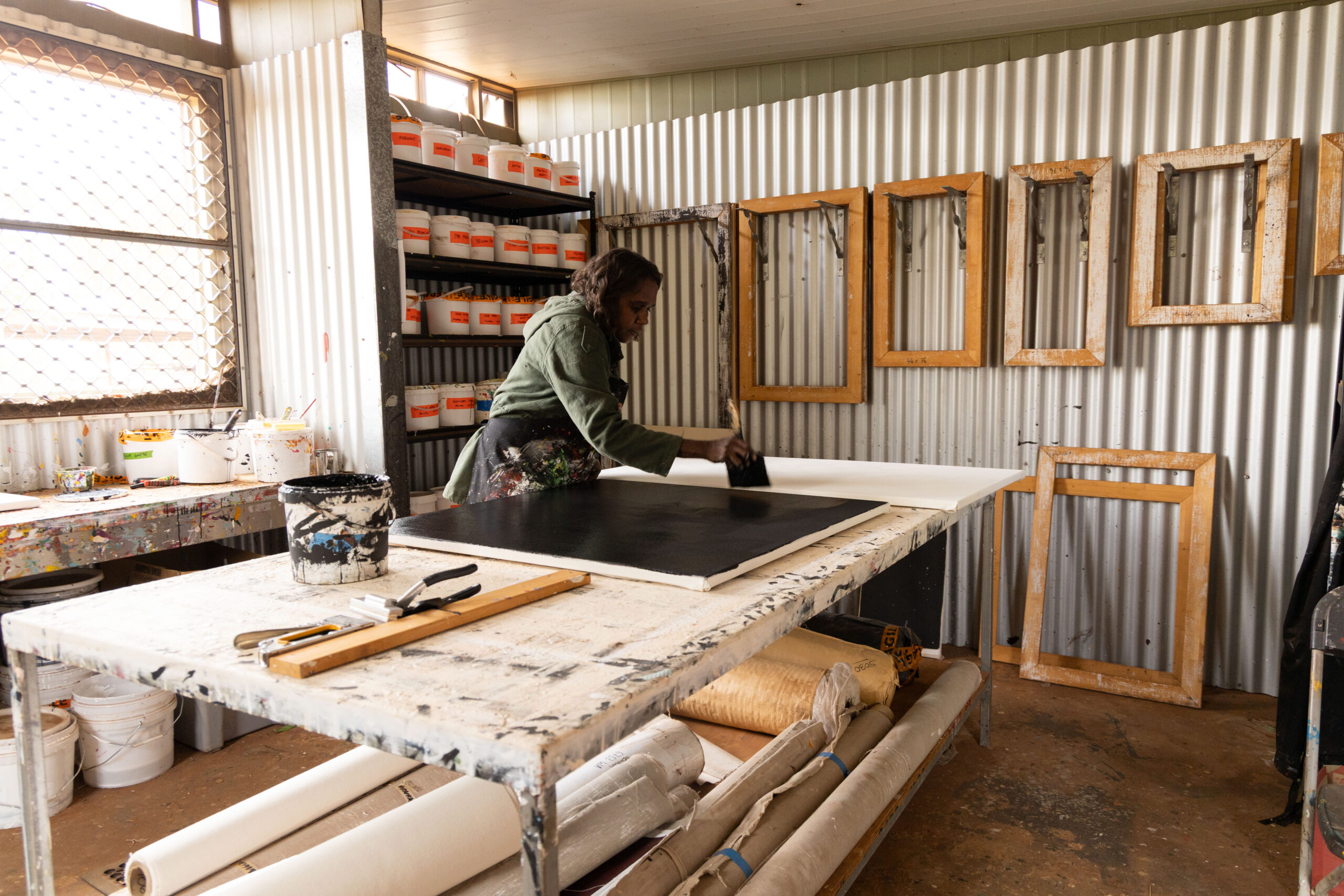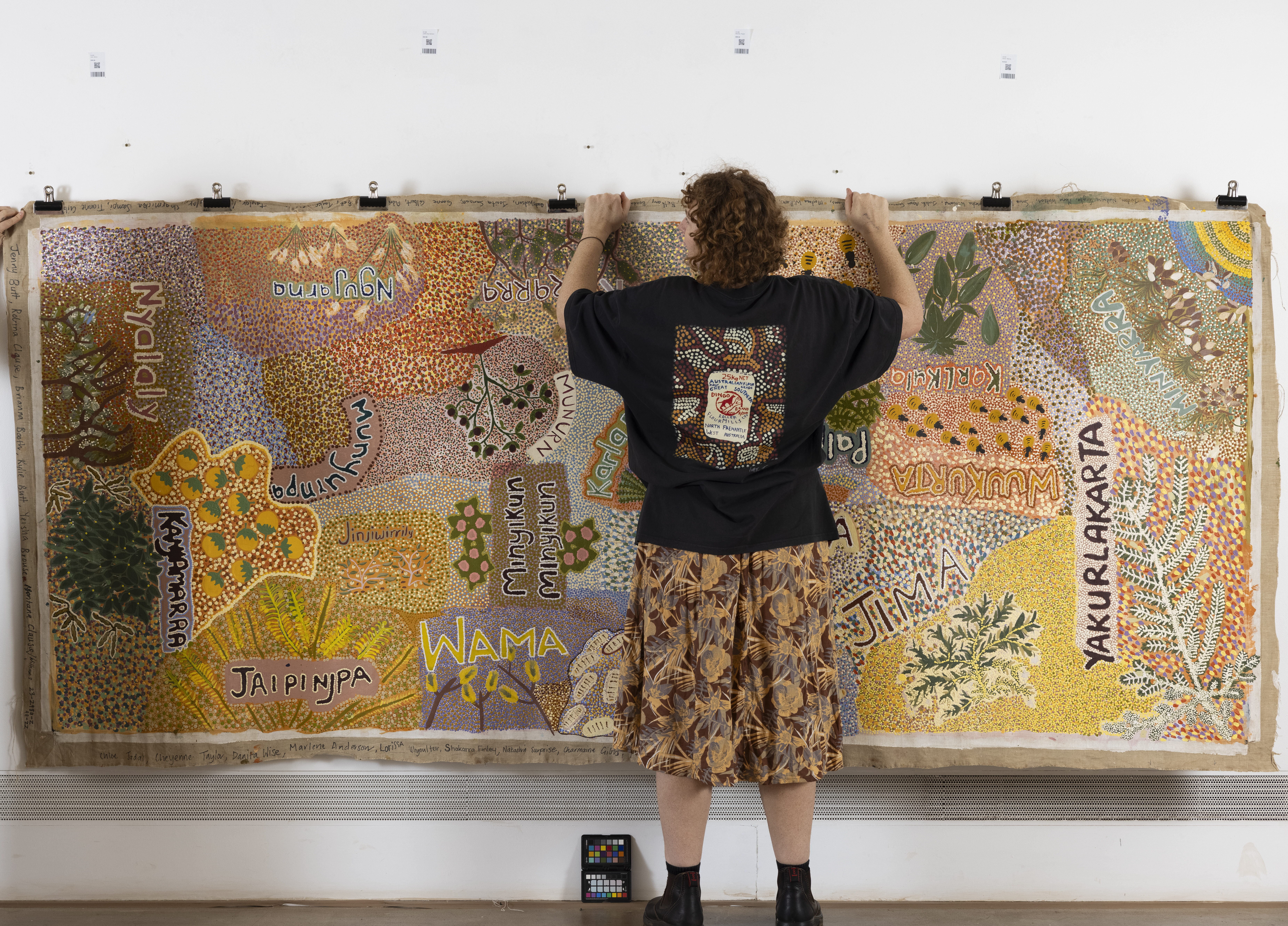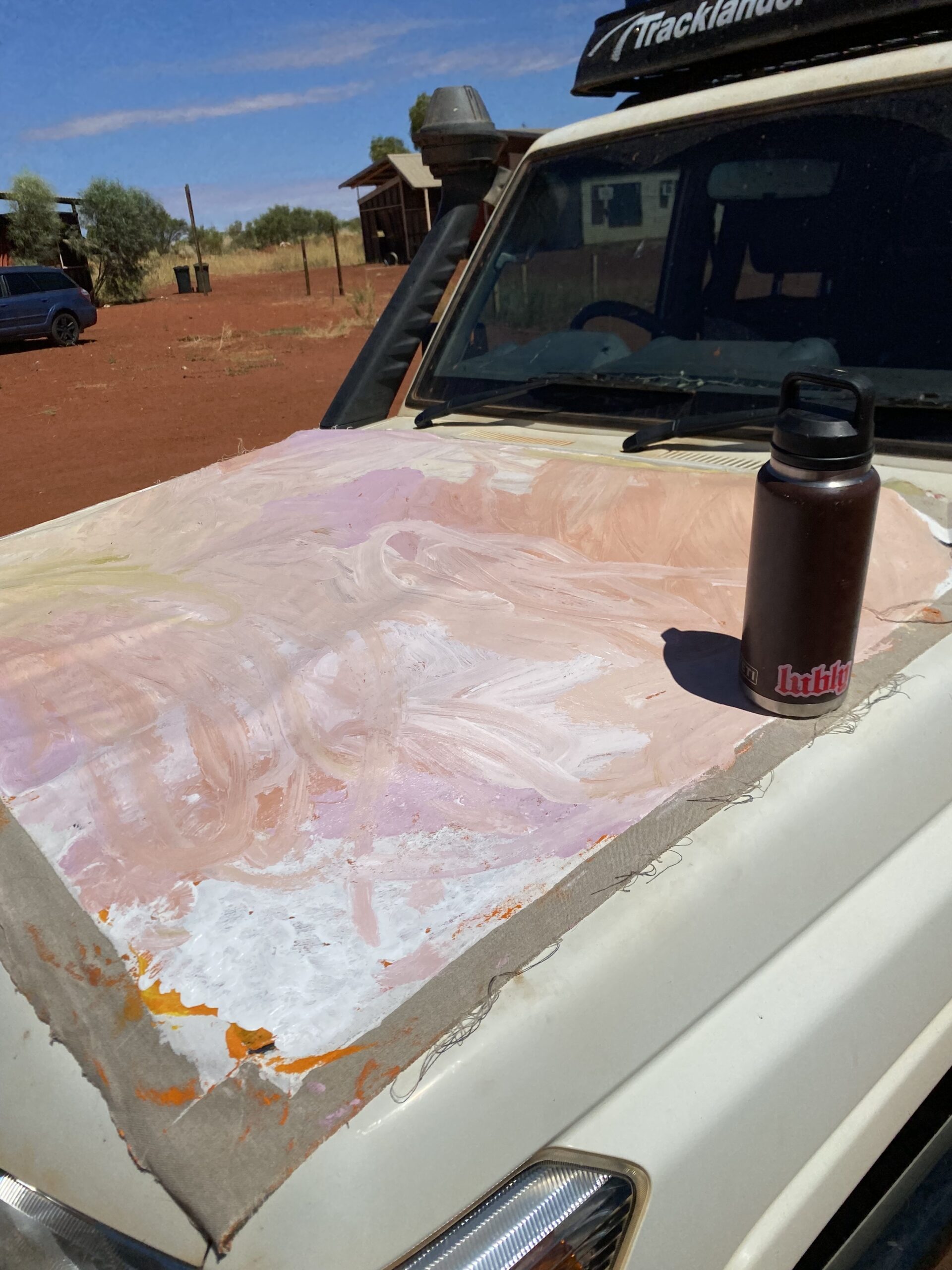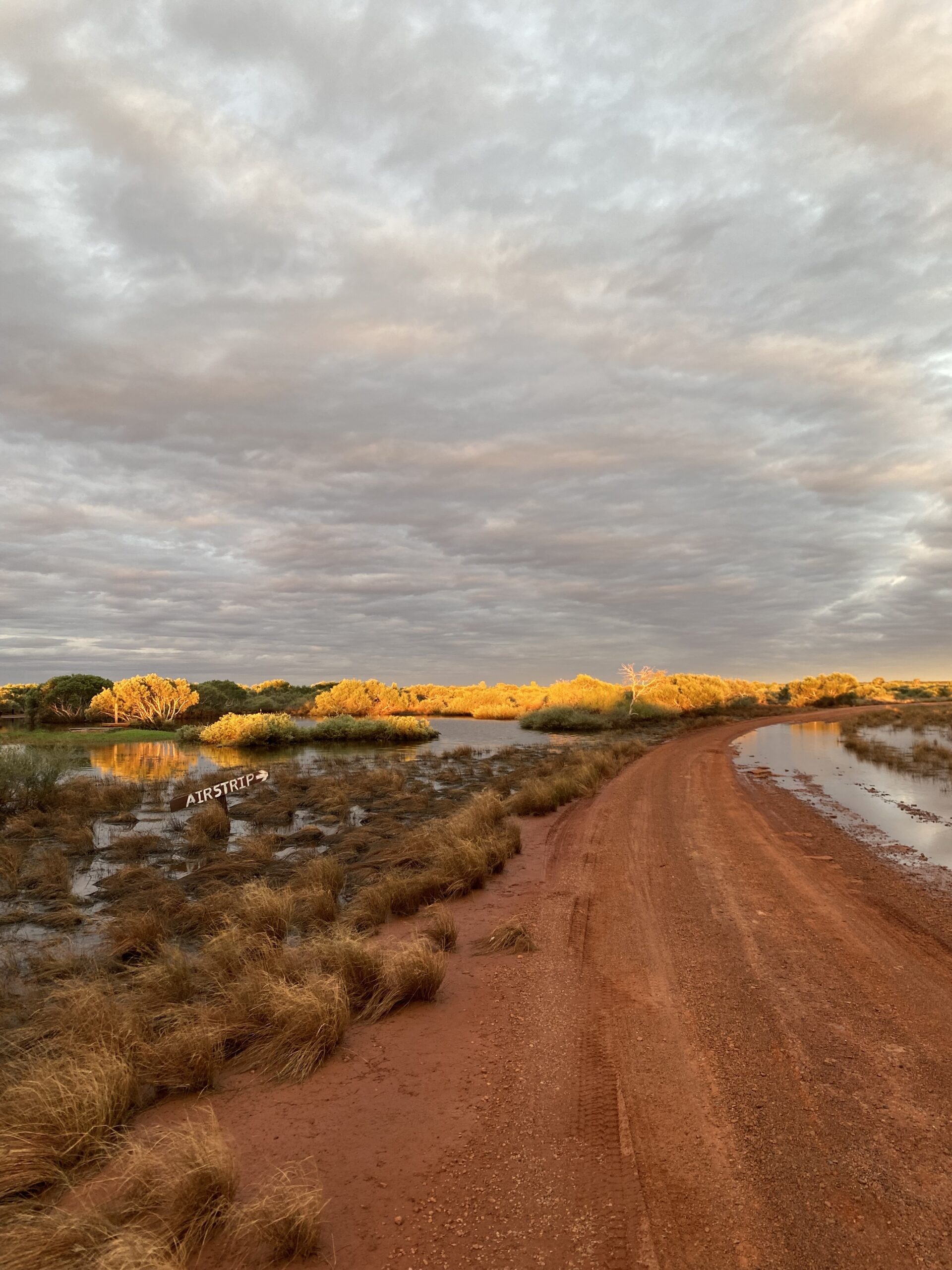


Butterflies with electric lilac eyes on their wings fly in and out of the arts shed all day. Sometimes they softly whisper past my face. Everyday Nyirti, my favourite jarntu (dog), sits out the front of the arts shed watching the world, panting in the slow heat. Last night the full moon rose pink over the tuwa (sandhill) but it looked like it was fighting the urge to melt back into the sand.
The arts shed has been so quiet. No artists have come in. Multiple pirnyi (funerals), sorry-business, health appointments and other family duties mean that a lot of people- artists- are in towns or other communities. Two days after I arrived in Kunawarritji, Bugai left into town for much needed appointments. So for a week I waited, and prepared, hoping the desert matriarch would return well and wanting to paint.
I had been so excited to work with Bugai Whyoulter this field season. Recalling my last time working with her, in 2023. She painted consistently and powerfully. Easily completing huge, exhibition-quality 2 x 3m works in a morning. I would be constantly reminding her to drink, eat, and rest at lunchtime. She was so capable and so cheeky. She would be constantly demanding more paintings, and more biscuits. Talking about the Ngurra (Country) she was painting. Always chuckling to herself and shooting me glittering glances.
Now, three years later, she can definitely still smash a handful of biscuits in a cuppa tea for breakfast. And still manages to make climbing in and out of the 4wd motorcar look easy. But her painting has slowed, her conversations, words and movements have too.
This time now isn’t necessarily for huge, exhibition quality works. It’s for rest, and caring for her health and her spirit. Slow cooked lamb stew and a warm flannel for the face is what the arts shed is for- as much as painting. At the end of 2023 she lost her nyupa (partner), he used to accompany her to the arts shed and sit patiently as she painted for hours. Now, her son pops around to the arts shed multiple times a day for her medications and to check on her. It often takes her a long time to get settled.
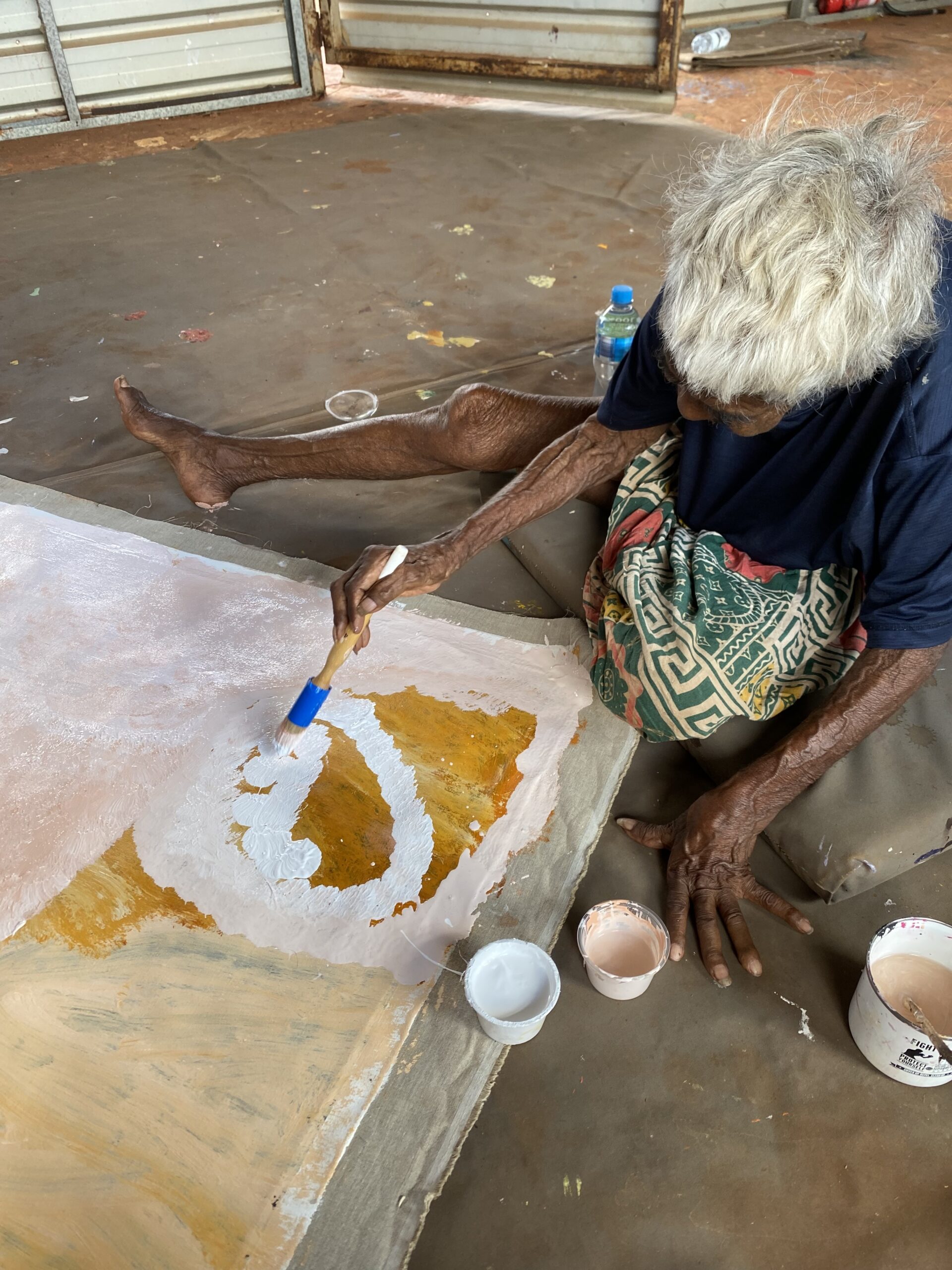
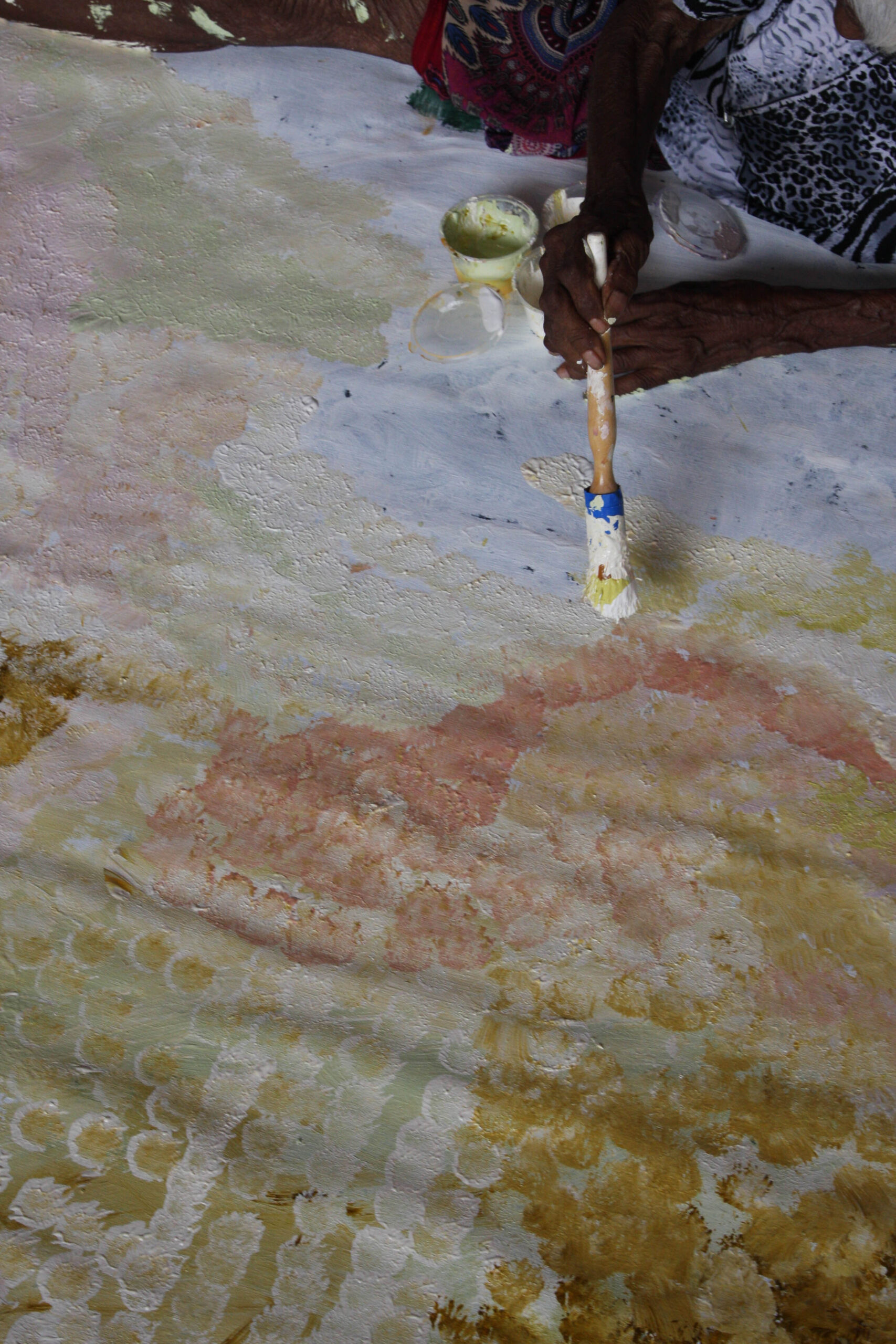
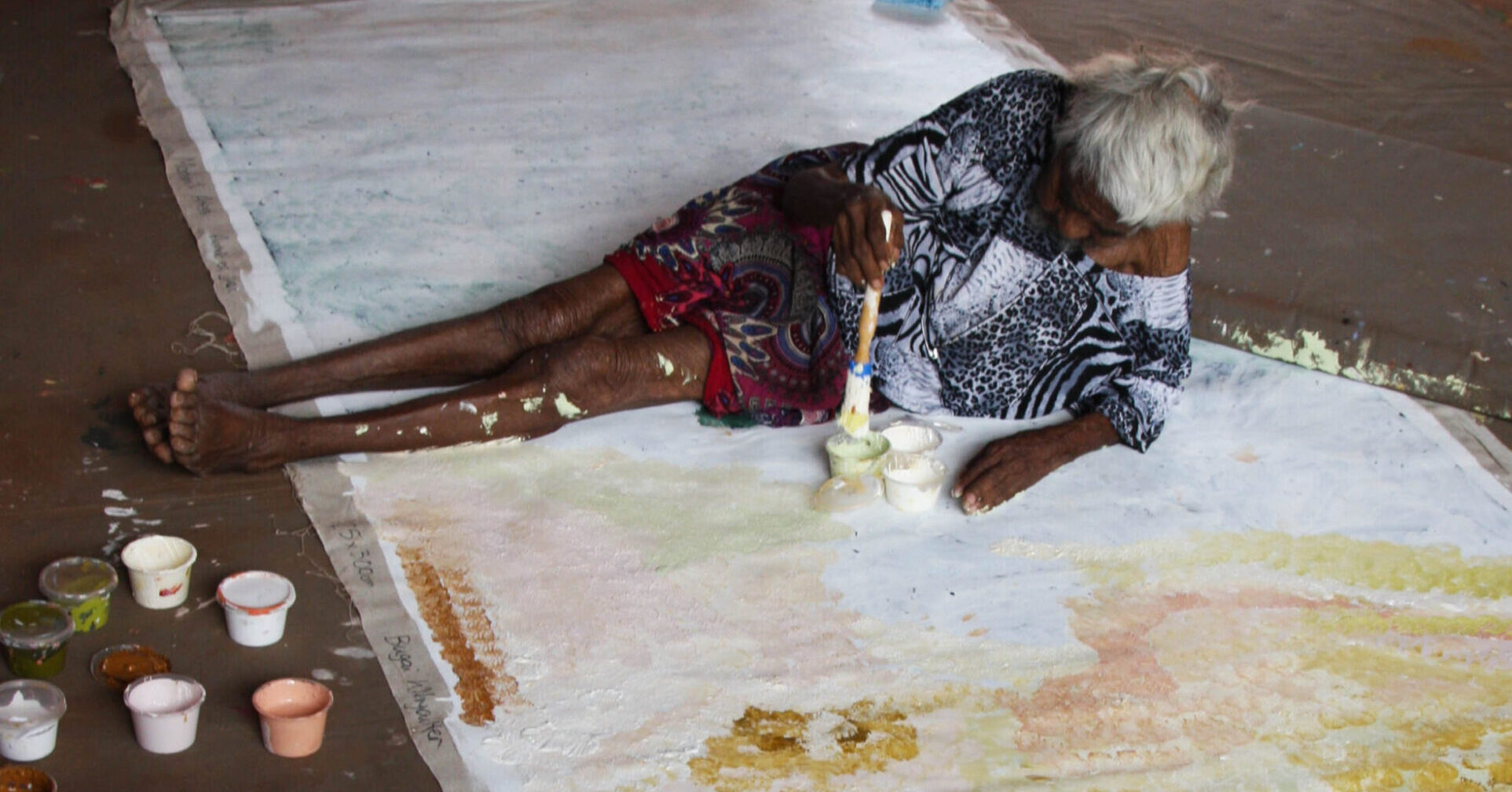
As her body ages, and her movements change, so does the movement in her painting. She finds a place on the canvas that works for her body, and paints as far as she can reach, and then in- as close to her skin as she can before she needs to move. Painting herself into her paintings, again and again.
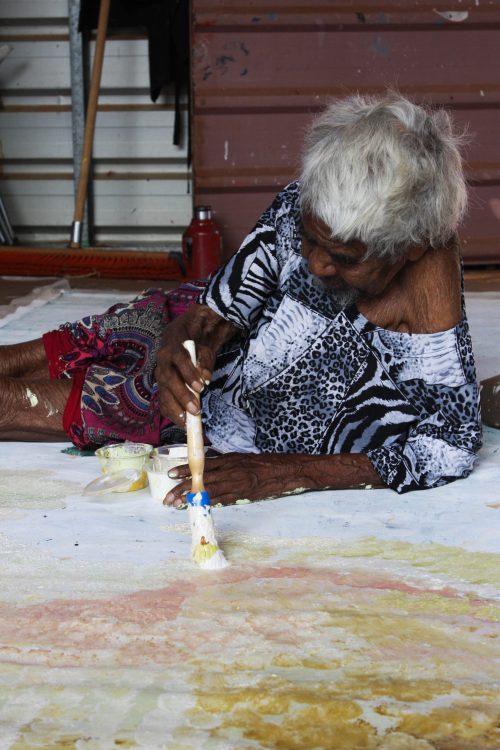
Endlessly a mysterious and wonderful painter; Bugai’s works continue to spill out of her. Communication was always limited to the Martu wangka (language) I know and try desperately to learn. Now, it seems most communication is telepathic and nonverbal. It’s a challenge and a joy to facilitate and hold the space for her artmaking process. A lot of facilitation now is helping to make her feel as supported and comfortable as possible. I used to be chasing her around huge canvas, trying to keep up with her, making her paints easy to reach. Now I am repositioning cushions, her legs, reminding her to drink- bringing the bottle to her lips, reminding her to stop when I sense she is exhausted.
Bugai hardly ever stops in the middle of a painting. Each work is a reliving. A re-membering. A homecoming to Ngurra (Country/home). And she is completely immersed in the depiction of her home, Ngurra, until the painting is complete. And lately, after each work she immediately casts the brush aside and lays down. I’ve learnt to have a swag mattress or cushion ready at the end of the canvas…. And she sleeps for hours.
So tender, seeing this strong matriarch, sleeping at the end of her huge paintings. Her small body, and the huge expansive desert body represented in her paintings, resting together in ethereal, shifting dreams.
It is important for Martumili Artists, and the world, to slow down to the pace of this important and powerful woman, Bugai Whyoulter. She has given so much to Martumili Artists and to the Australian Indigenous visual arts sector. She has contributed many exquisite paintings, ninti (knowledge) and time to make Martumili Artists what they are today. It feels like an honour to slow to her pace and continue to work with her, honour her and give her the support she needs to keep artmaking. Her presence, like her paintings, is both gentle and strong. Bugai is at once consistent, sturdy, and ever-changing.
Words by Elsie Harbour