A decade of growth, experience and memories: Amy Mukherjee’s reflections on her time at Martumili Artists
When Martumili Artists’ current Manager, Amy Mukherjee, first came to Australia 12 years ago as a fine arts student and backpacker, a job at Port Hedland’s Courthouse Gallery brought together her interests in art, culture and people for the first time. Since then, she has spent a decade working at Martumili Artists — first as Gallery Coordinator and, for the past six years, as the organisation’s Manager.
In this interview, Amy reflects on the relationships and experiences that have shaped her time at Martumili, the importance of working respectfully across cultures, and some of the projects and people she cherishes most.
Can you tell us a little about yourself and how you came to work in the arts?
I’m originally from Scotland. I’ve got a mixed heritage- Scottish and Indian. I studied fine art, and had lived a few years in Bristol in the southwest of England to complete my fine art degree and had a love of travel and culture.
I moved to Australia 12 years ago as a backpacker, really. My dad was living in Port Hedland, so I came to Port Hedland temporarily and ended up getting a job at the Courthouse Gallery and staying. I had found a real sweet spot that was a mix of community arts, culture and community engagement, which was amazing. I didn’t have access to that in the UK.
How did you first become involved with Martumili Artists?
[While] I was in Port Hedland I learned about the Martumili Artists- I heard really great things about the organization, about the achievements of the artists, but I also really loved the artwork itself as well… I had a great admiration for the art centre.
Through my work, I also met a lot of Martu artists who were also painting at Spinifex Hill Studios [in Port Hedland] and was lucky enough to visit Punmu briefly with two senior Martumili artists Mrs [Nancy Nyanjilpayi] Chapman and Mr [Minyawe] Miller (both now deceased) – in a kind of fortuitous synchronicity of what was to come. I also met elder Ngamaru Bidu and other travelling artists at the [then] Hedland Art Awards, and was blown away by their artwork.
When Martumili opened their art gallery in 2016, they decided to hire a gallery coordinator… and that was my entry point into the organization. I moved to Newman, helping Martumili establish a bit of an exhibition schedule and some sales protocols in their gallery.
At that time the organisation was quite small, so I ended up wearing many hats and it gave me a really great exposure- insights into the behind the scenes of how artists work, why artists work, the stories that go into the artworks and the art centre logistics. Making sales, driving the bus, rustling up lunches, making friends.
I was lucky enough to work alongside many senior artists, and under the previous Martumili manager, Carly Day, for four years. In 2020, when Carly went on long service leave, I took on an acting manager position, and [when] Carly decided to leave her role and I was recruited into the permanent manager position.
What do you think has helped you in your role as manager?
I think I was driven [to WA] by a real sense of adventure. I’m from a really small town, (which I was keen to get out of!) and the job at Martumili really satisfied that. A background of having a hybrid cultural identity has also meant that I’m really curious and interested in culture, in spirituality, in customs- because that’s also informed my own identity as well, particularly within art. I’m really interested in how someone’s creativity can validate and express their own cultural identity from a personal perspective. That really aligned with the work that Martu artists do in expressing and validating their culture through their creative expression.
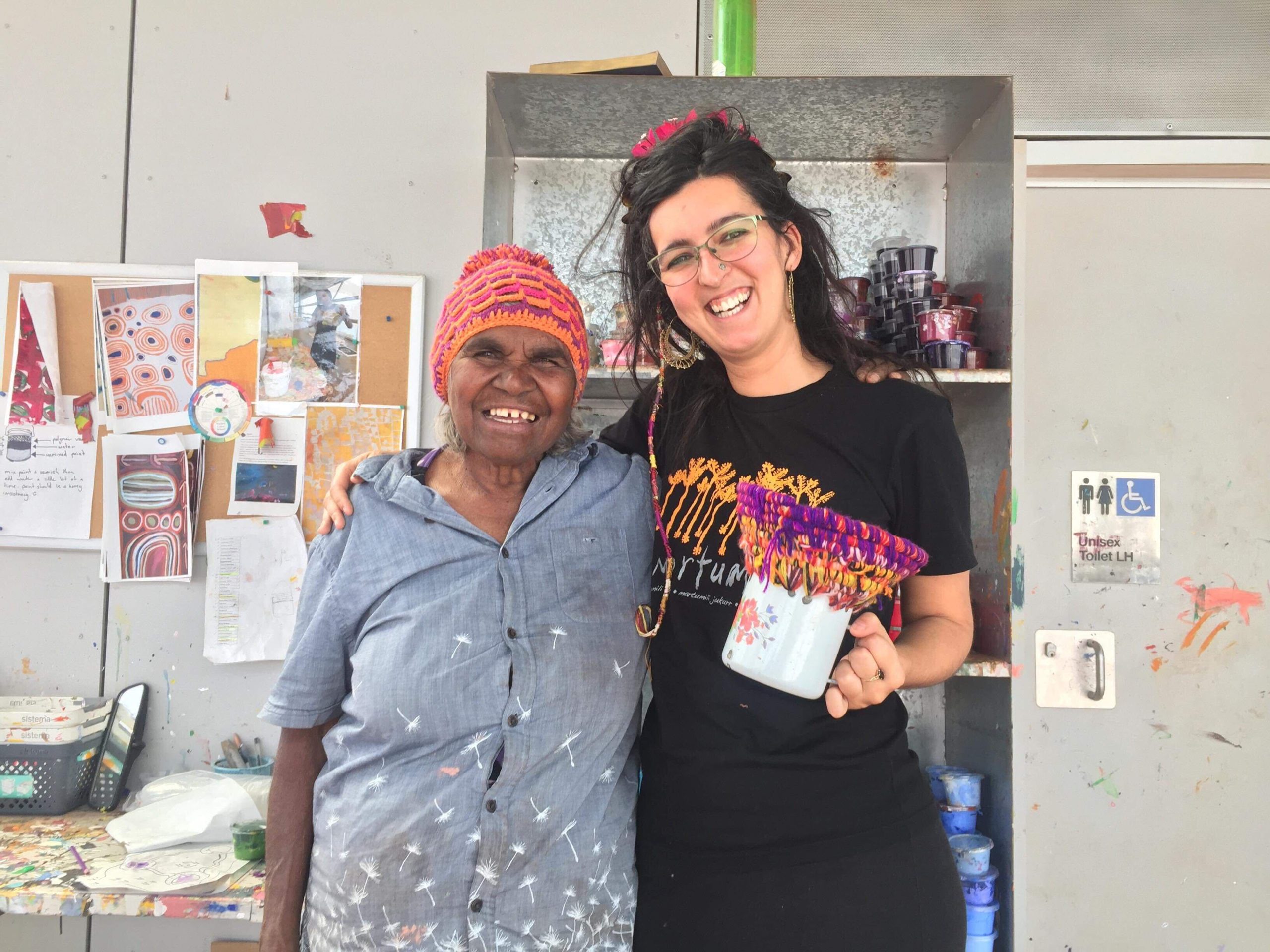
I think what also drove me to and has kept me at Martumili for such a long time is the importance of family within the culture and how warm and embracing the Martu community are to outsiders. You know, having a job at Martumili is never just strictly professional. You are being allowed into other people’s lives and in doing so you also let people into your life as well.
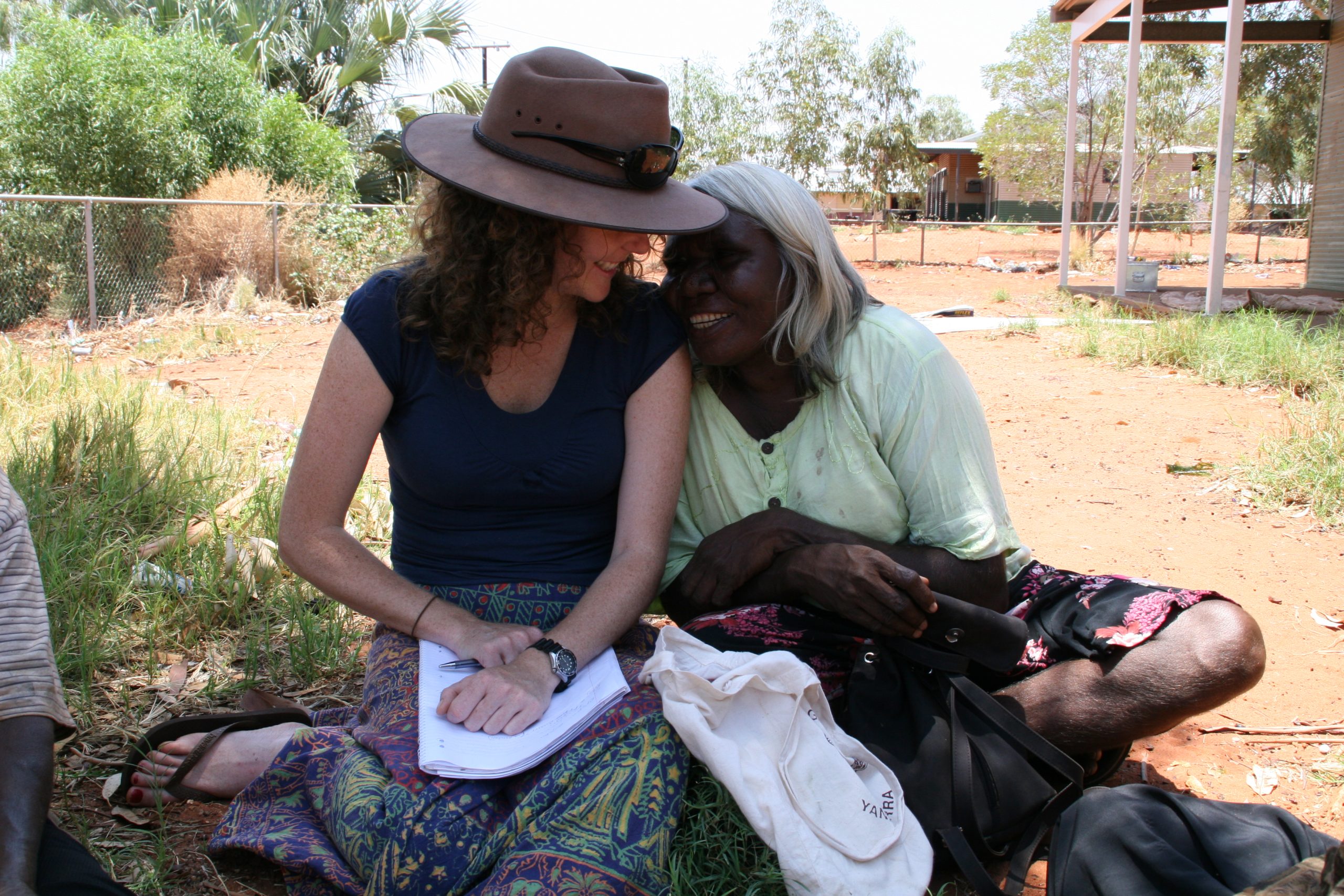
Part of my enmeshment with Martumili, with the community, was through Kanu Nancy Taylor (dec.), who was an elder, a senior respected artist. And around the time I moved to Newman, she also moved to Newman for health reasons. At that time, back in Scotland, my gran was going through some health struggles and obviously I was a long way from my family. So connecting with Kanu and helping with her care really allowed me to feel a sense of connection and kinship with my own elders that I wasn’t in close proximity to. So that relationship really nourished me and welcomed me into the community. And also, Kanu was a teacher- she taught me a lot of language, she taught me a lot about culture. I was really grateful to have that familial relationship such a long way from home.
What are some of the most important things to understand or know about in your work?
I think [successful working in an art centre] has to be rooted in strong relationships, which is easy if you care about people. That’s the best part of the job – being in relationship with community, with people, and being part of the family.
This links back to my origins and who I am. It’s a really challenging role at an art centre to play that cross-cultural liaison. And it’s a responsibility I take really seriously as a non-Martu person. And I feel like I’ve put a lot of my effort and intention into navigating those cross-cultural spaces with integrity.
And practically, I think that is done through maintaining really good relationships with Martu elders and with leaders and with artists. But it also comes from being a little bit intrepid as well, and not being afraid to represent Martumili in intercultural spaces with confidence. I’m talking about partnerships with corporate organisations, partnerships with local government, with government organisations. Being able to represent Martumili in those spaces is a challenge as a non-Martu person. It requires really strong trust from the elders and artists you work with. And it’s a challenge that I think you benefit from leaning into, being vulnerable and transparent about, and receiving support from community.
Does understanding family and kinship connections also play an important role in the day-to-day running of the art centre?
The more time you spend in a community and the more that you understand the cultural and kinship structures, the better a job you can do for people. It really helps with outreach. It also helps with connecting the dots for opportunities for artists. You know, if you see an opportunity you can recognise how someone might be connected to a relevant person or story. You can never stop having those creative conversations with artists- becasue it may lead to a life-changing opportunity down the track.
Martumili has grown considerably during your time with the organisation. What do you see as some of the key achievements?
Yes- it’s 10 years. I would say that the quality of the output of Martumili has always been incredibly strong, but I think potentially the public profile of Martumili really grew in the first five years that I was in the organization. And that is down the amazing artists at the centre. It was really just connecting stories and the content that’s already there to the public. The archives of Martumili are just so abundant- there’s so many great stories, photos, artworks, experiences. So I think a big part of Martumili’s growth and success has been connecting audiences to stories that already exist, artists who are already making great work through marketing, through exhibitions, partnerships, local experiences and events – things like that.
I think that other large part of Martumili’s successful growth has been the refinement of the hub and spoke model of delivery. We’ve increased, and then refined, the art production systems at Martumili; the roster of field officers; the infrastructure that’s in the remote communities; accommodation; even the art sheds. We’re getting new art sheds coming up, but over the last 10 years, we’ve continually been improving the art sheds and trying to make them more comfortable space for artists and community to work in in the remote communities.
[It’s been important for me to have] a really broad ambition for what Martumili can achieve, while also remaining really connected to what the realities of opportunities are, what artists really want, what kind of ideas or events have a lot of energy about them in the community. The best outcomes have been from connecting those two things at the right time.
For example, connecting an exhibition opportunity to an artist that’s got so much energy about an idea, connecting a funding opportunity to an art production concept that’s got passion behind it. The artists at Martumili have so many fantastic ideas. And probably is the case for many art centres. It’s actually trying to cross the obstacles of access, of remoteness, of resourcing, to really bring those ideas to their most ambitious fruition. And that’s when we get the best results at Martumili.
How has the organisation changed in terms of its staff and sales?
The staff itself is around 50, but it’s the equivalent to 11 full-time employees. [75% of staff are Martu]. Sales have [also] increased. Honestly, the people are what make Martumili. it’s just such a fun place to work. In 2020, we, during lockdown, moved all our artwork stock to the online shop and that was a huge investment. That increased our sales initially, but it’s also meant that we’ve managed to maintain steady sales as well.
Are there any particular projects or memories that stand out from your time at Martumili?
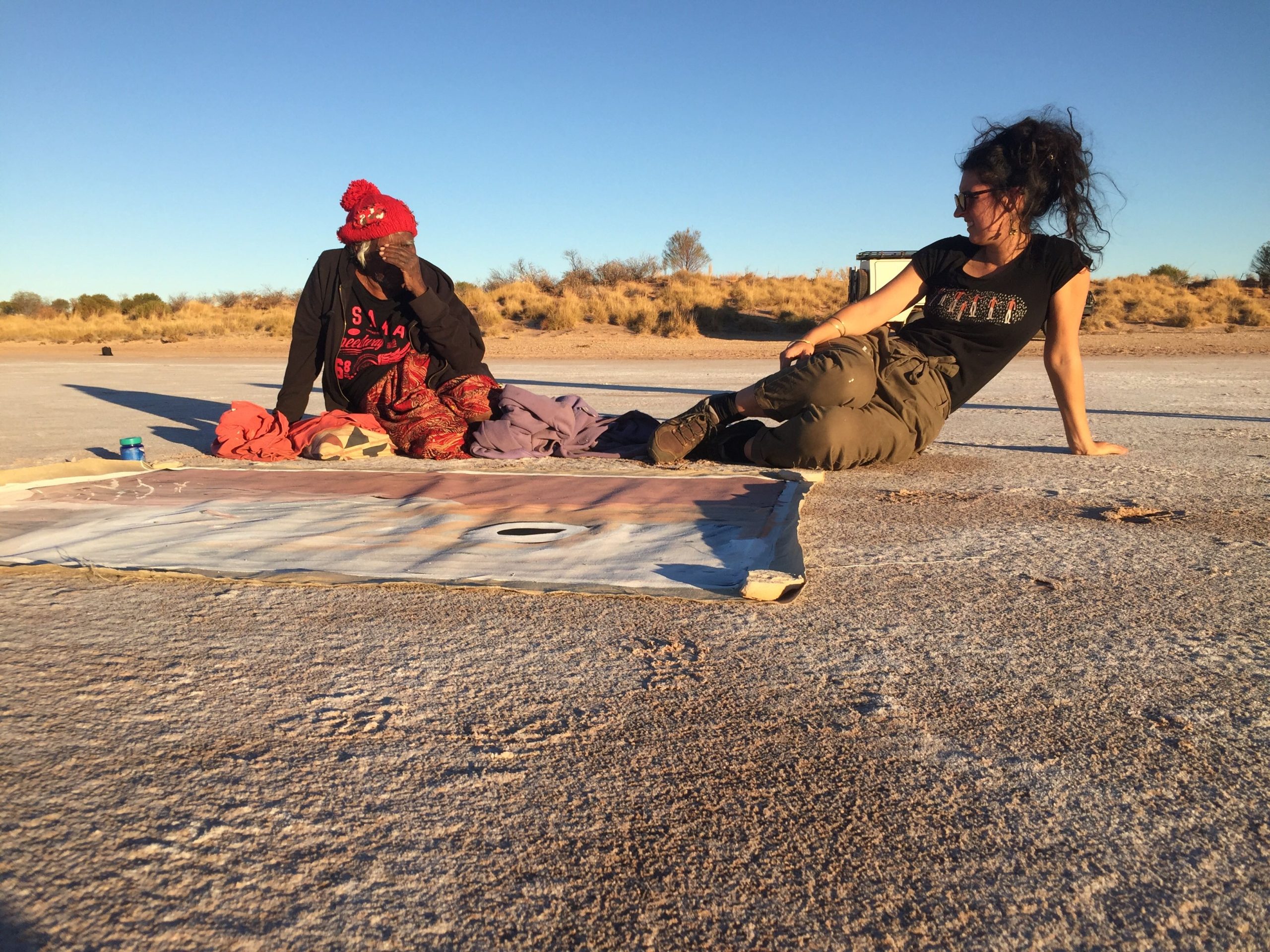
A favourite project would probably be the Warrarnku Ninti project, which was a collaboration with KJ [Martu ranger organisation Kanyirninpa Jukurrpa]. It was a series of camps and exhibitions that focused on Martu concepts like waru (fire) and mirrka (bushfoods) that are really important to rangers and artists both. And the work that came out of that was fantastic. It also gave shape to the trips that we collaborate with KJ on regularly. From that project It was great to learn how valuable it is to Martu that the organisations work closely together.
My best memories of Martumili are definitely with some of the oldies who are no longer with us. I’m really grateful that I met and had close relationships so many incredible senior elders while I’ve been at Martumili. It’s been so important to my growth within the role and my understanding of the culture and of the roots of the art centre. The elders made this place, and we carry their stories forward.
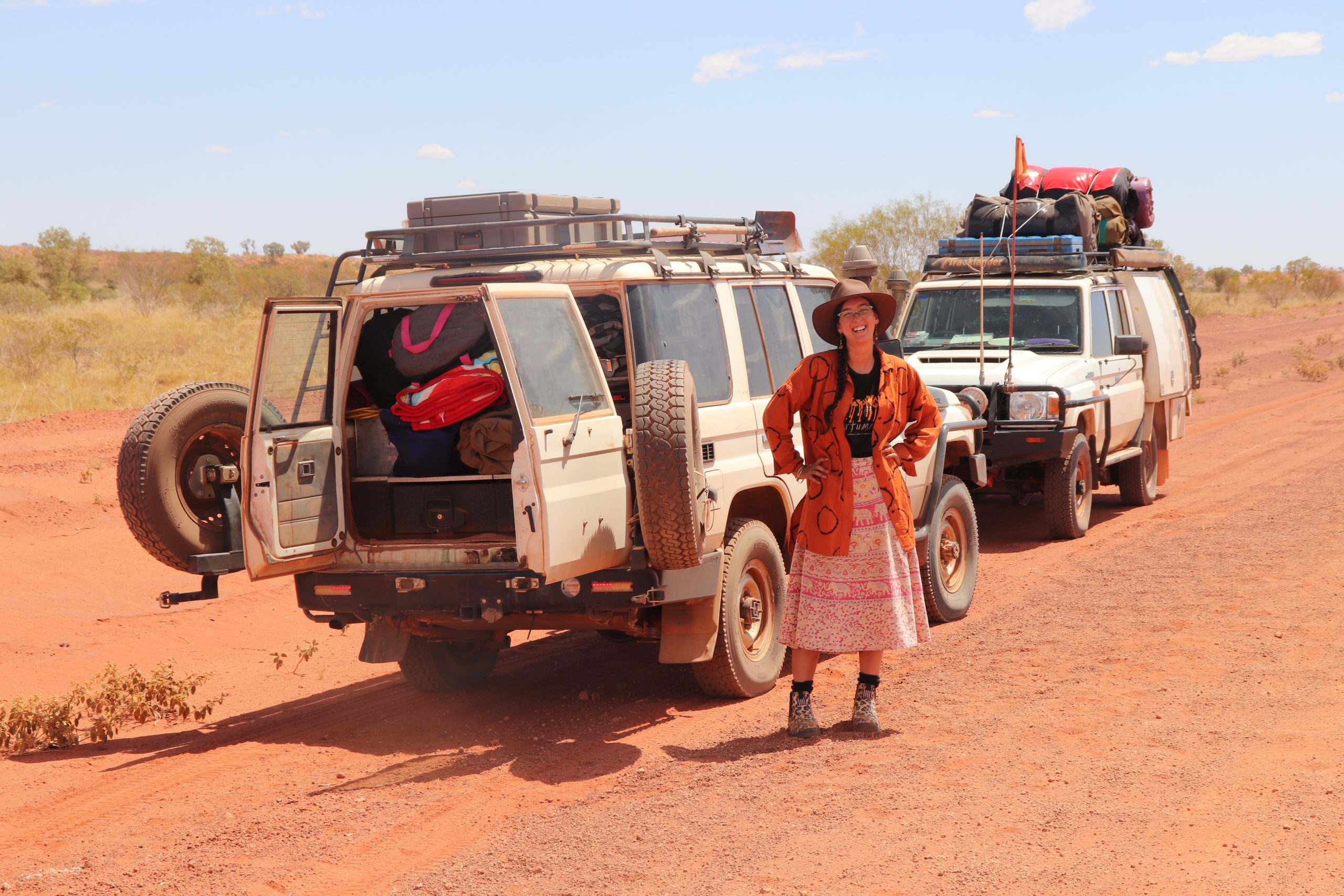
A recent memory was getting out to [remote Aboriginal community] Punmu, toddler in tow, to do a Wangka Lumpa Kujungka meeting. I used to go out to community once a month- I used to zip in and out very casually in the wagon. Fill up the car and stick on the road trip playlist! And things changed when I became a mum – it all got a little bit harder. But we made it, with the support of the whole Martumili village, and it was a great feeling to share my family with artists that have been sharing theirs for so many years, and to return to the community I had first visted 12 years ago with my little boy.
Martumili has also placed a strong focus on engaging younger people. How has that developed?
Before I even started at Martumili, there was already an energy and an understanding from leadership that we had to engage the younger people. And that was really coming from the elders. They were so determined to build a legacy for the generations that they were leaving behind, and so the projects dedicated to engaging younger people started a decade ago.
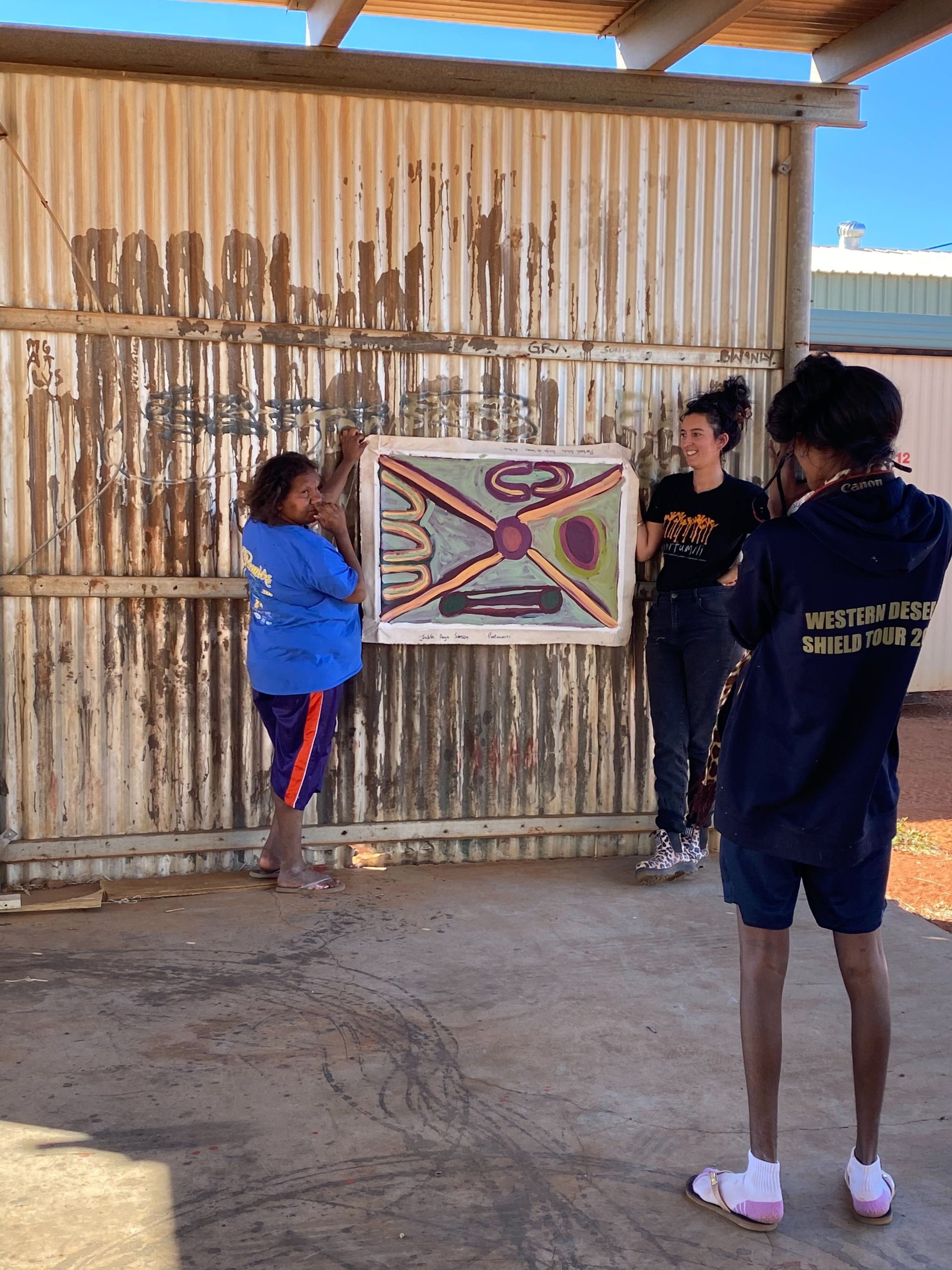
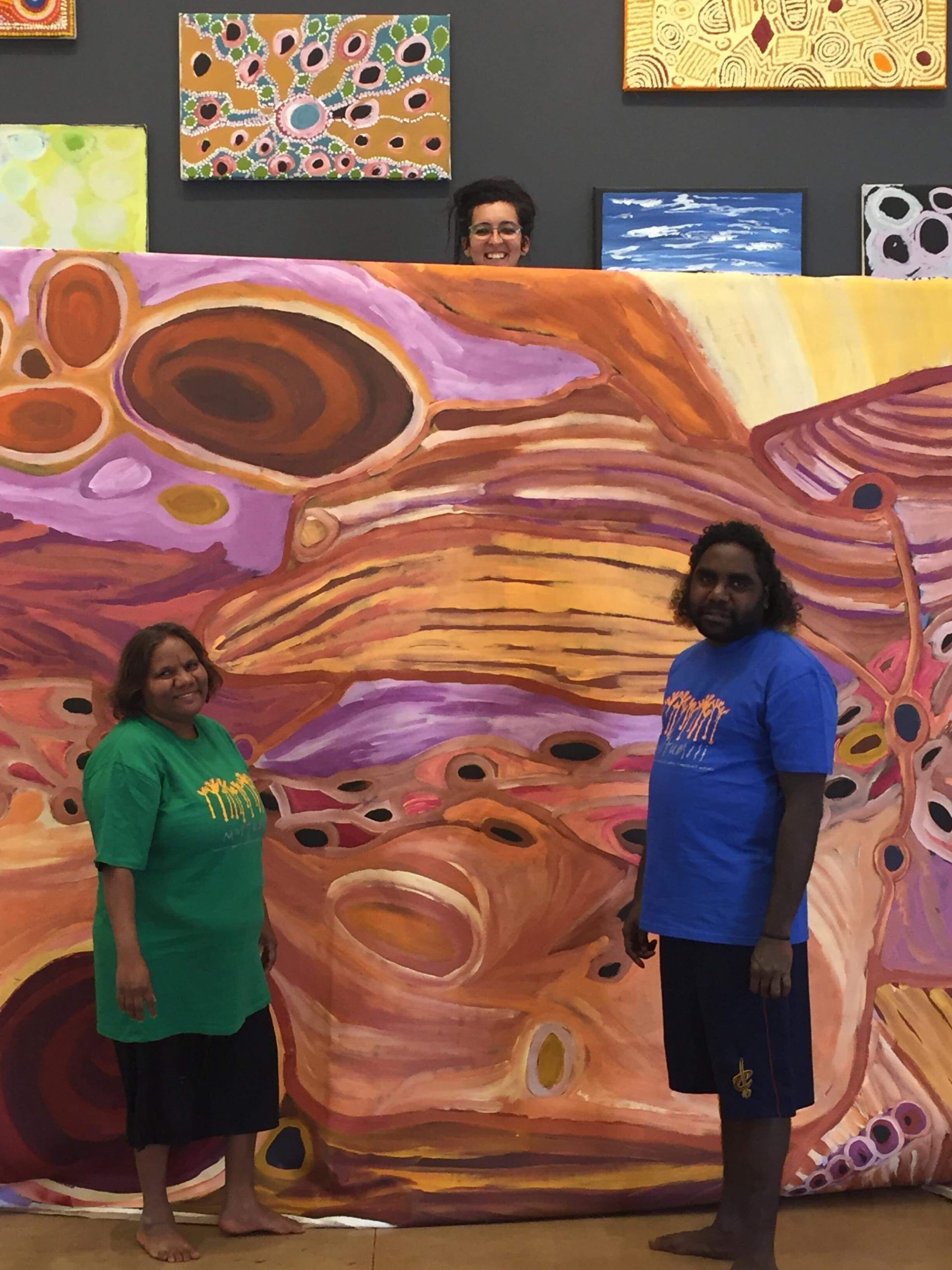
[That’s been realised through] pretty consistent opportunities for young people. Whether it be through photography, professional development skills, leadership skills, public speaking, animation – there are many different and diverse opportunities for young people to engage. It’s also been possible because Martumili works with so many artists. Last financial year it was 400! And we produce around 1600 canvases each year. You can never have enough staff for that kind of operation!
Not only is the studio space really welcoming, it’s also encouraging for staff, volunteers and visitors to just jump in. You know- “You’re a young person, you’re in the studio, come on, you’re helping us making cup of teas for the oldies!” Or, you know, “Let’s get you signed up as a worker because we’ve got to keep up with these canvases!” There’s always so much to do. Everyone is in it together. It’s that kind of team attitude – let’s all pitch in and try and get it done. And have fun while we’re at it.