Building Martumili: Reflections and lessons learned from Martumili’s first manager, Gabrielle Sullivan
To mark Martumili’s twentieth year, we caught up with its first manager, Gabrielle Sullivan, to reflect on the organisation’s early years and the work of building an art centre alongside Martu artists. From modest beginnings to a purpose-built studio and gallery, Gabe shares memories of the people, relationships and ideas that shaped Martumili—and the lessons she has carried with her ever since.
Could you tell us a little bit about yourself and how you came to manage Martumili Artists?
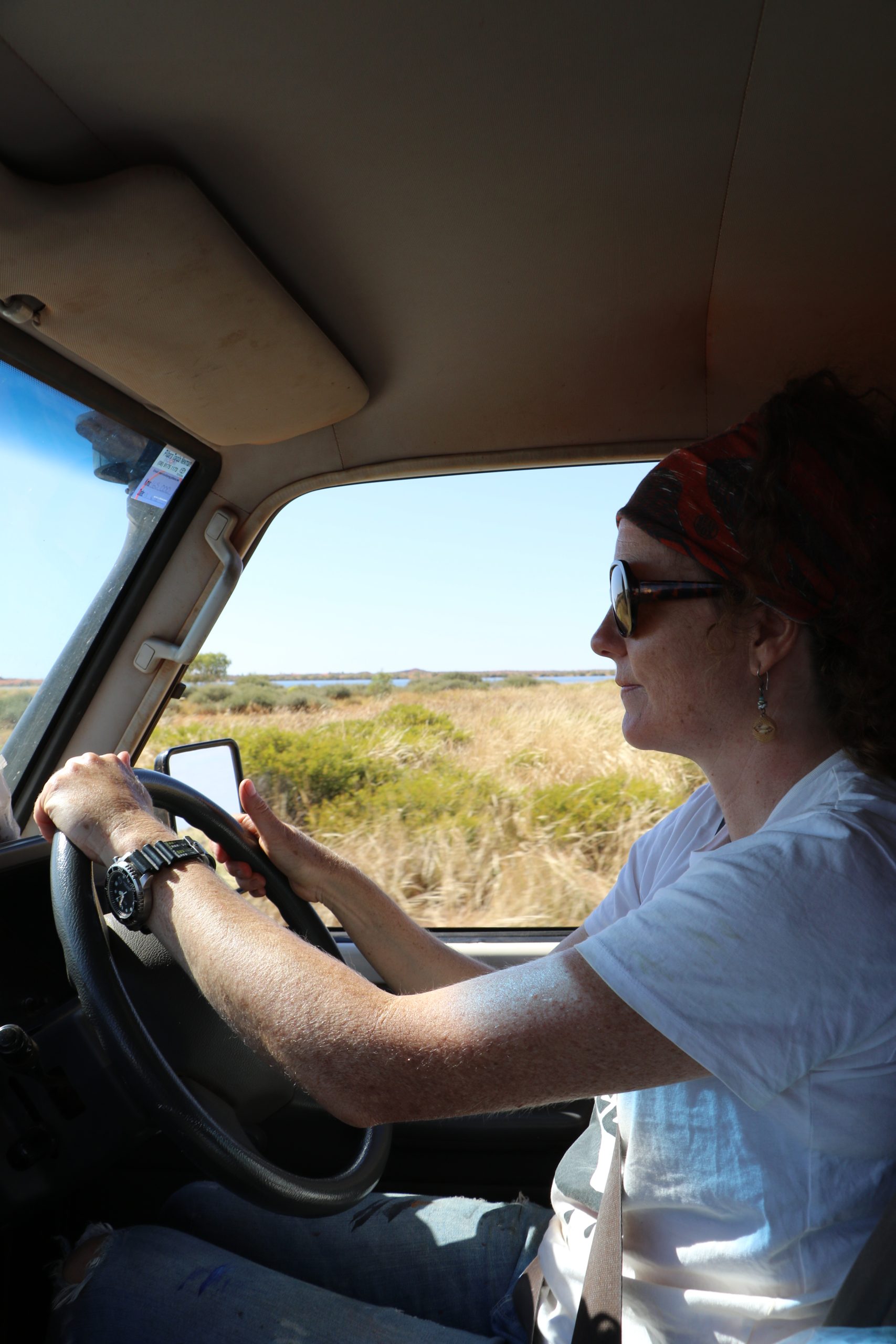
I studied visual arts at Sydney College of the Arts and then Landscape Architecture at UNSW. When I graduated, I thought that was what I would do forever. I was working in urban design, which I loved, when I came across an advertisement for an Arts Development Officer with what was then Arts WA. It wasn’t a deliberate career move, but I remember thinking, ‘You can’t live in the city all your life.’ So I ended up in the Pilbara for nearly 15 years.
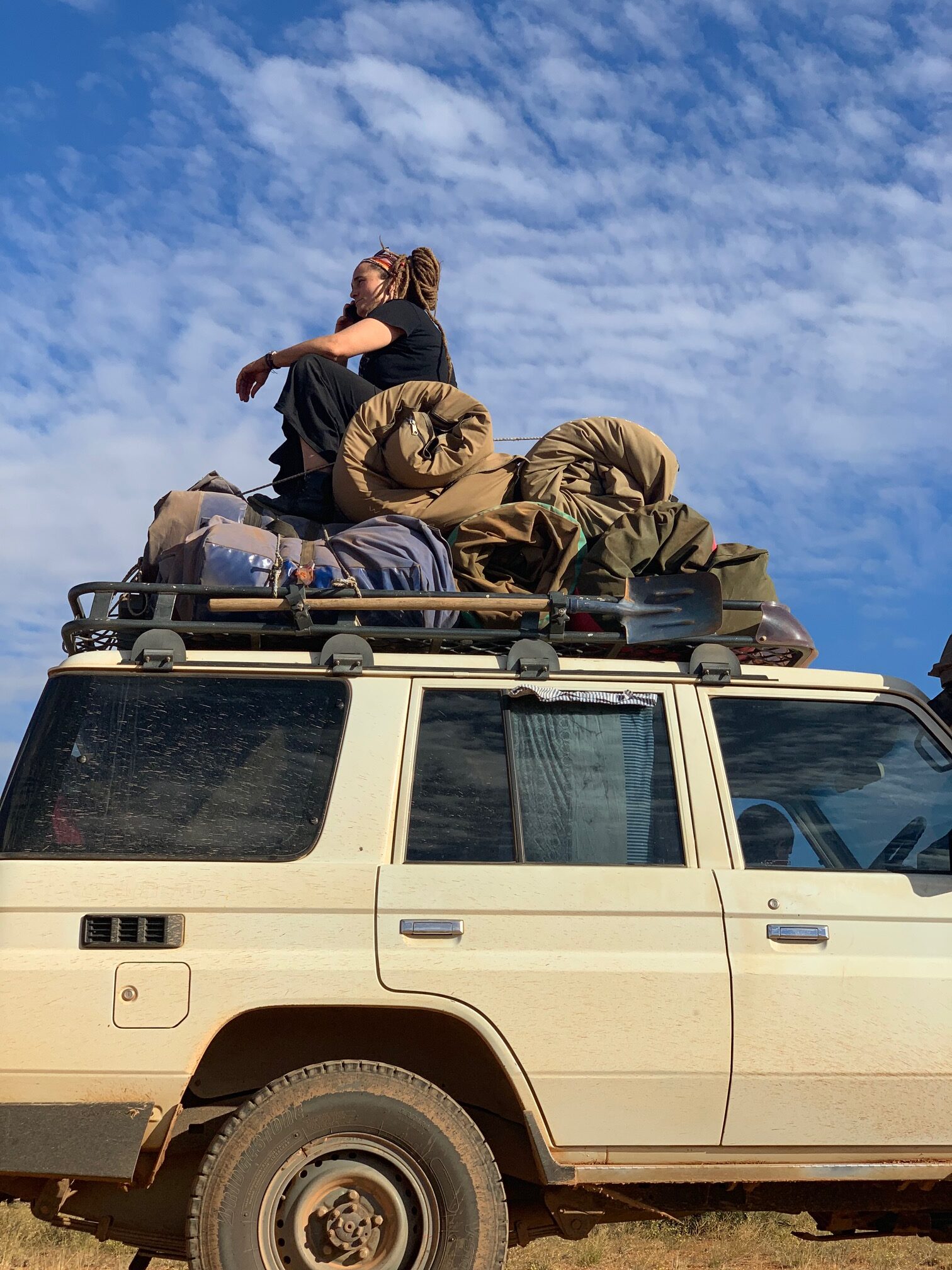
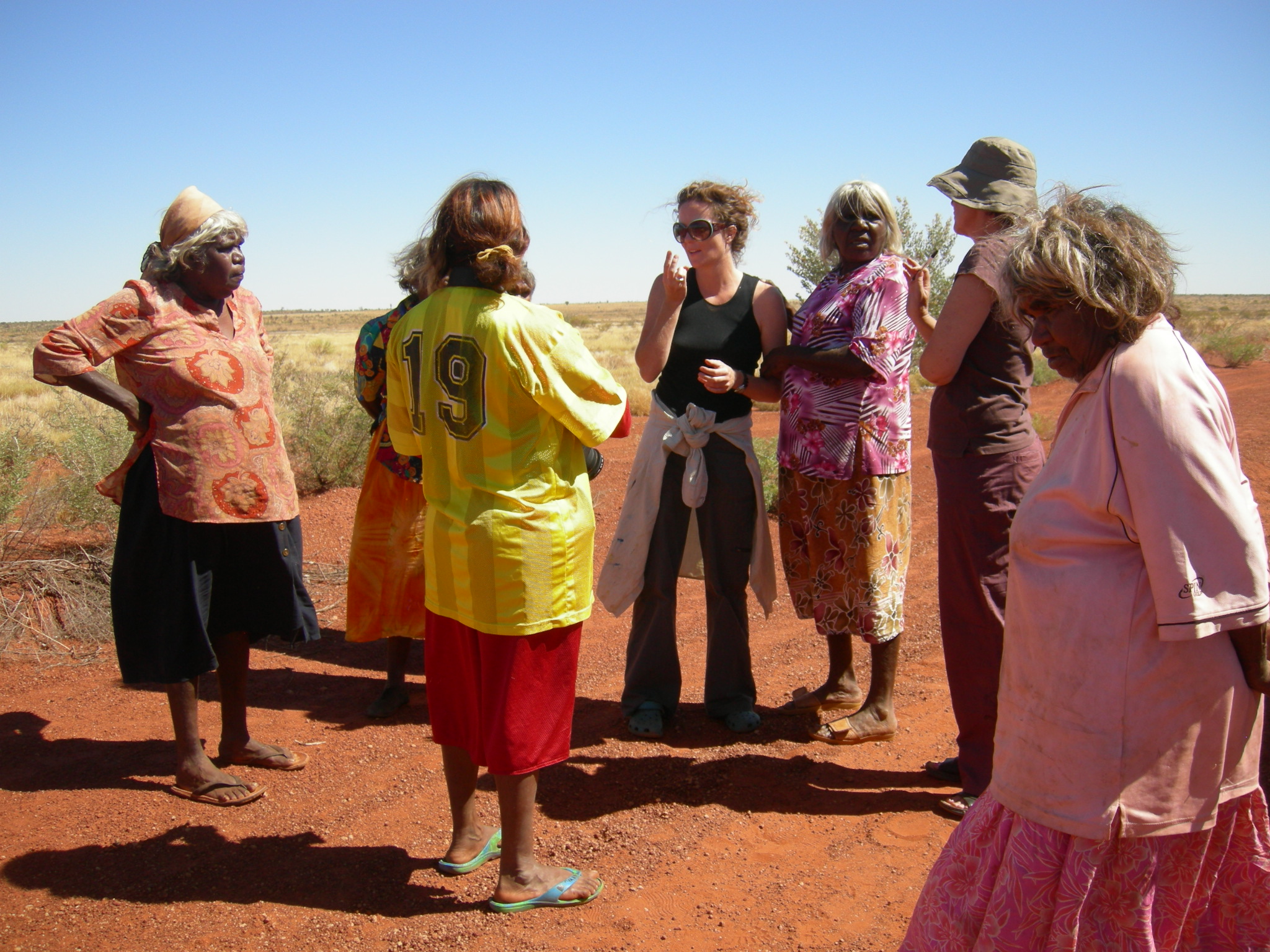
I was working… as an arts development officer across the Pilbara region, working with Aboriginal and non-Aboriginal artists and community groups. I was based in Newman… and I travelled everywhere, including Martu communities in the East Pilbara.
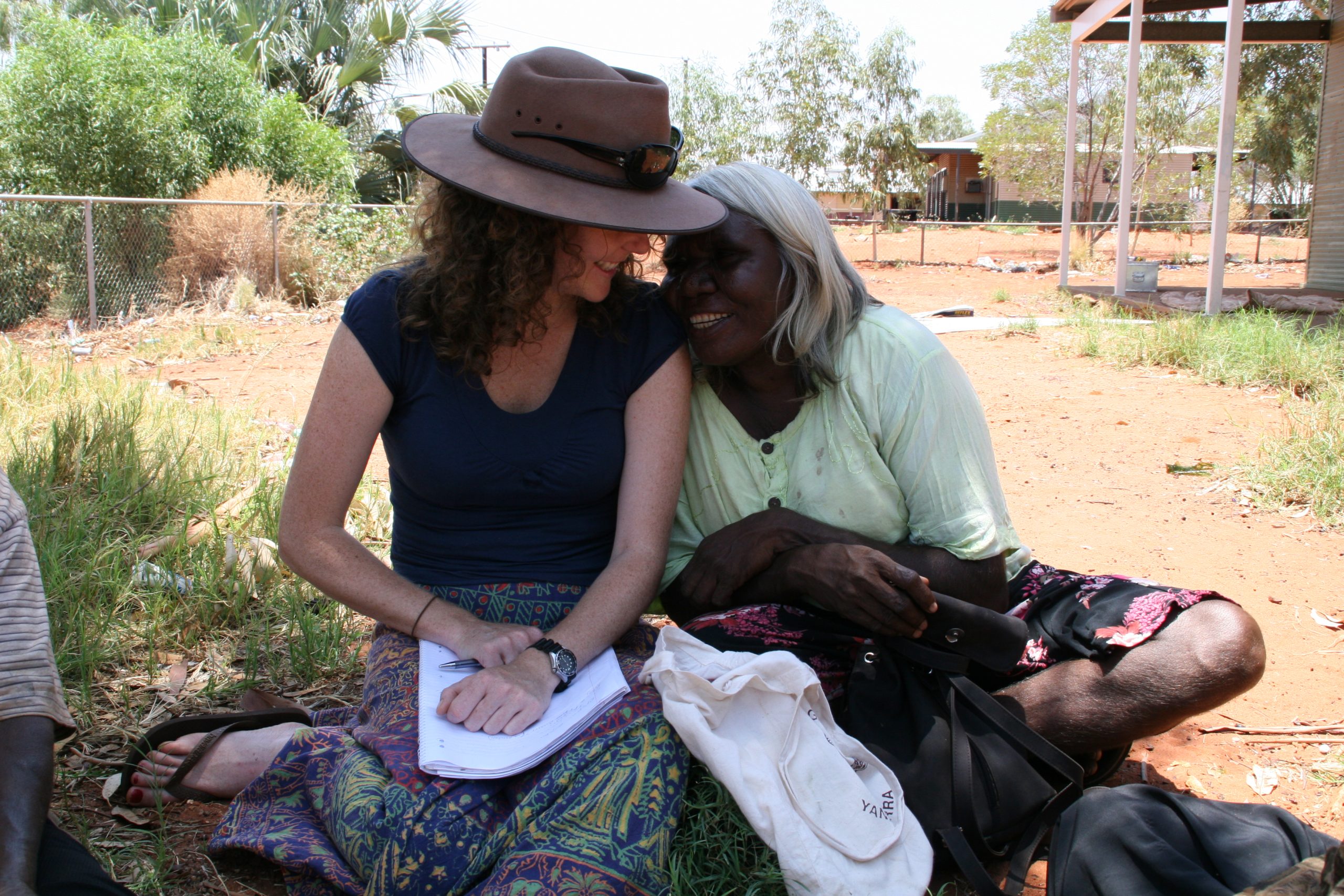
I supported artists to enter local art prizes and exhibitions and travelled regularly to Jigalong. There wasn’t an art centre at that time, but there were certainly artists. Senior women, including Kumpaya Girgirba, with other Elders were doing their own research, having their own conversations about the idea of an art centre for Martu long before me or other non-Martu people came along. People knew about art centres in Balgo, Fitzroy Crossing, Kiwirrkurra., When Martu decided they wanted an art centre, they established the governance arrangement with the Shire to support that to happen
People kept saying, “Gabe, you should come and manage the art centre for a little while.” At that time I was living and working in Port Hedland. In my head, I was thinking, “Okay—just one year while they (Martu) set it up.” I remember travelling to Jigalong for the interview. It was held in the community boardroom, and there were a lot of people in that room. I got the job as Martumili’s first manager, and it was fabulous.
From its inception, how did the organisation grow during your time as Martumili’s manager?
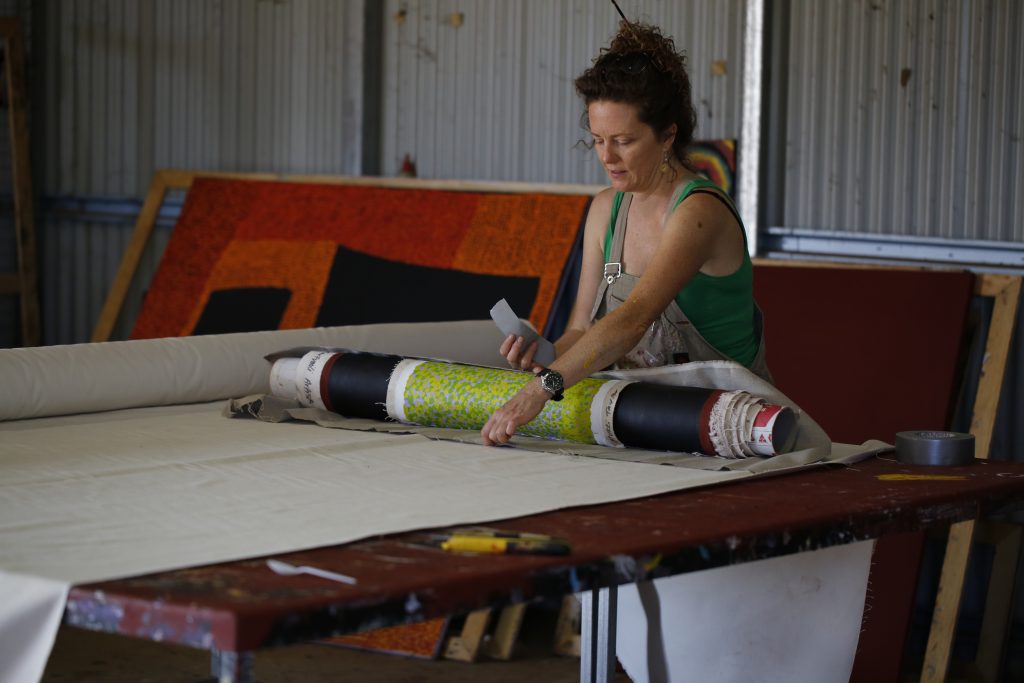
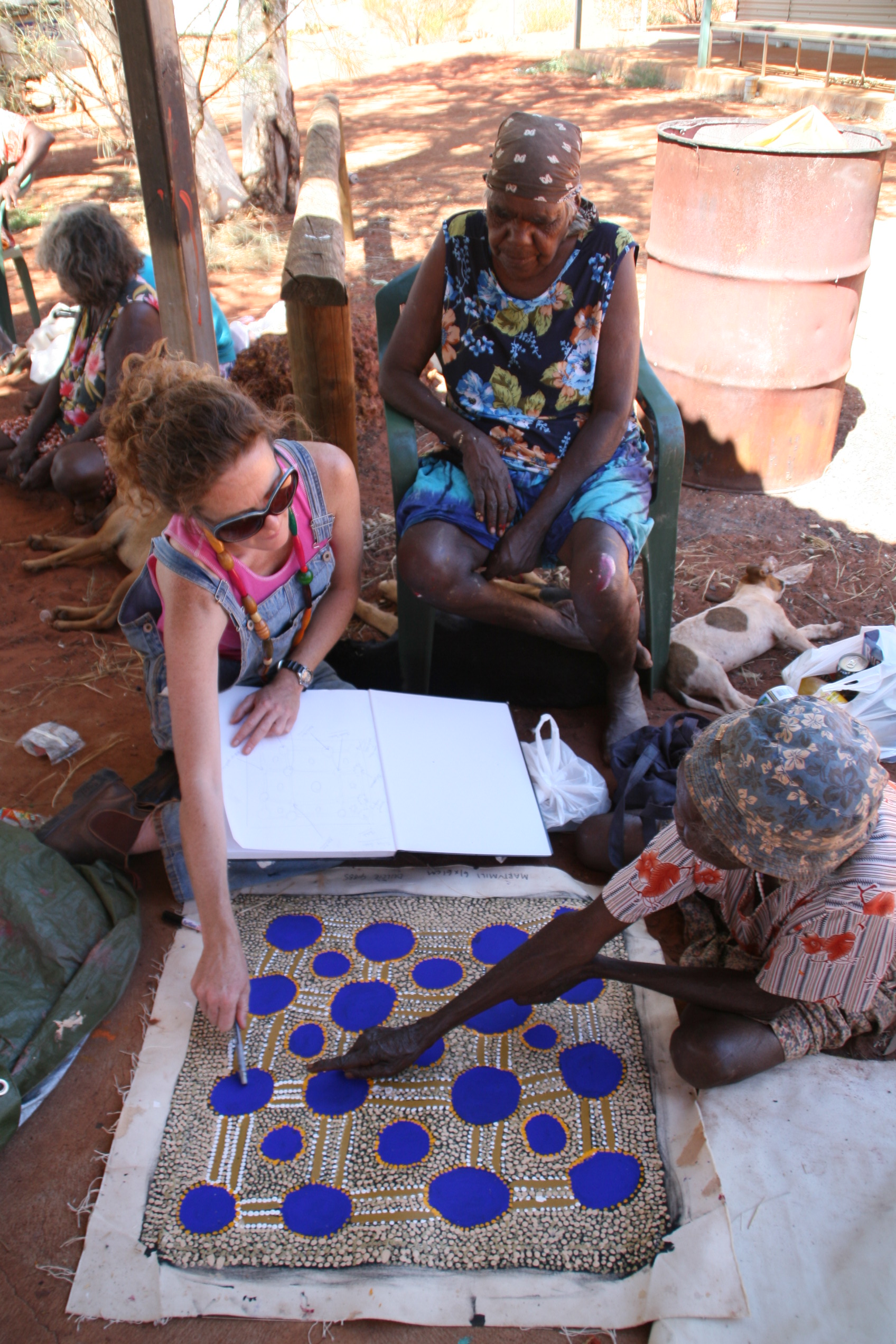
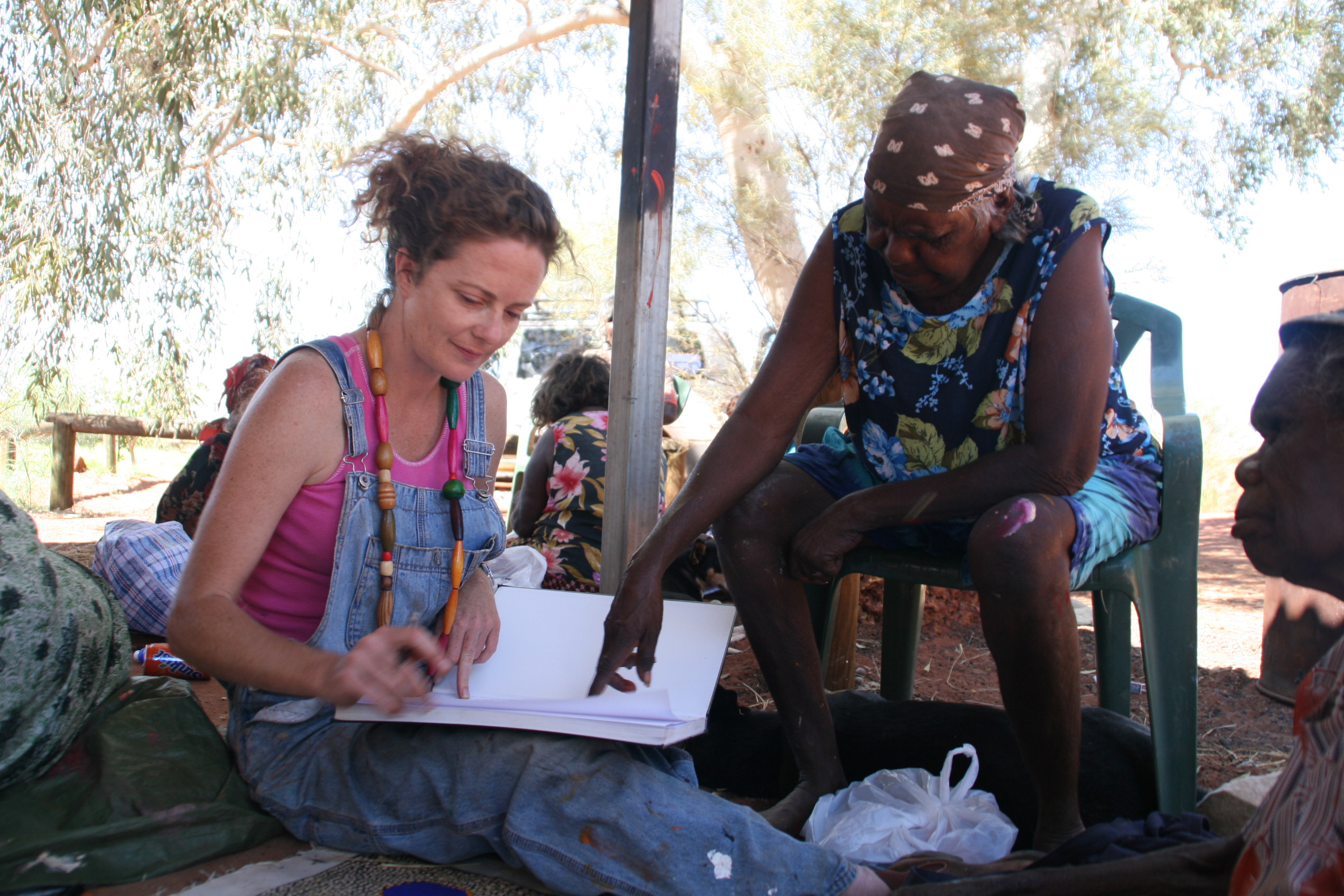
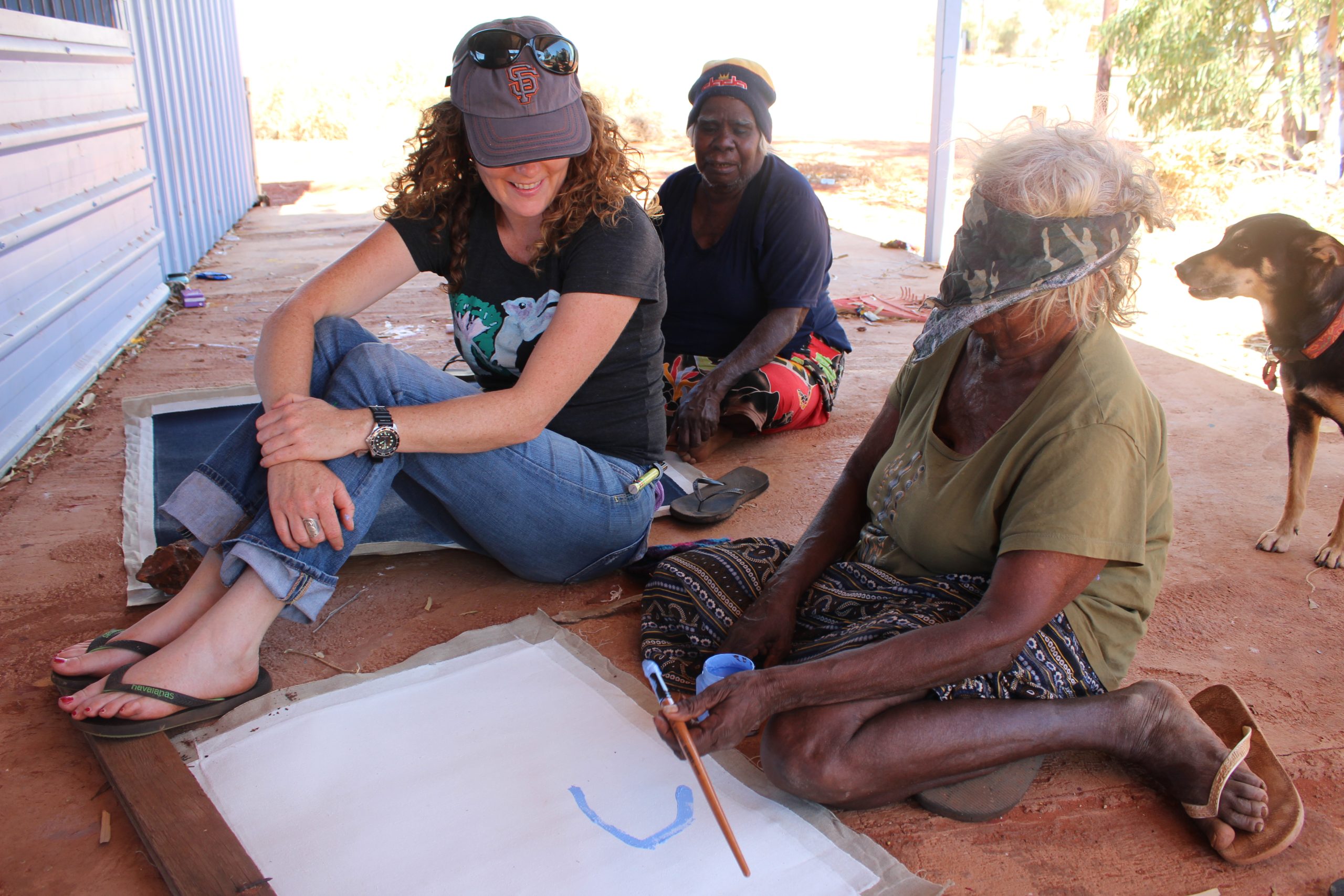
We started small, in a corner of the SOEP council chambers for the Newman office. When we outgrew that space, we moved into an office near the back door of the Shire. If artists from the remote communities were in town, they would sit under the tree on the Shire lawn and paint. We stretched and primed canvas at the old Parnpajinya Community on the edge of town, where some artists also worked. It’s important to remember that Martumili wasn’t then and isn’t now an art centre located in one community. It started off as a hub and spoke model. Newman was the hub because that’s where artwork was stored, ready for exhibition and sale, but most Martu lived in the remote communities east of Newman, and it was a massive job to do laps of the desert to work with artists and collect artwork for cataloguing and exhibition. For most of the time, artists were working independently of any Martumili field staff or coordinators. I remember a lot of support from community coordinators, staff at community schools and clinics, pilots from the mail run and later KJ staff all being really supportive of the artists.
Geographically, though, Martumili was never small. From the beginning it brought together artists from Jigalong, Parnngurr, Punmu, Kunawarritji, and Irrungudgi, as well as people coming in from Warralong. The people who created the art centre wanted it to be for Martu culture and Country—not one art centre for each community, but one place for all Martu. People regularly moved between communities; what mattered was not where you lived, but that you were a Martu artist. I think that was a real strength.
After we outgrew the back office at the Shire we got two little dongas right in the middle of town, out the back of the Shire carpark… It was quite a lovely space to work ibut you had to pack up every day- the artist’s studio space was outside on a shaded deck. Because of the weather, the canvases would have blown over fences, and if it rained, they would have got wet… So managing that space was pretty labour-intensive.
We also knew the temporary space was limiting opportunities to sell work. People could visit the art centre and buy paintings, but displaying them properly was difficult. Whenever someone arrived, everyone had to put down their tools and hang works on fences or roll them out on tarps. There was no exhibition space, although we occasionally took over the council chambers as a makeshift gallery—but that’s another story, and one you should ask Allen Cooper [Shire of East Pilbara CEO between 1998 – 2017] about. We definitely pushed the limits when it came to taking over spaces. More importantly, packing everything away each day disrupted the artists’ work and meant missed economic opportunities. We knew we had to find a better solution.
The design and construction of the current Martumili art studio and gallery space, which opened in 2016, really responded to these issues. Can you tell us more about that process?
The process began with the artists writing the design brief with staff, and I think that is the key to the building’s success. Artists decided what the space needed to be for Martu: where it should sit in town, what it should include and what it should leave out. We held many meetings about those questions. The space needed to feel open and comfortable, it also had to be somewhere people could make a mess without feeling like they were wrecking a fancy gallery spaceA professional gallery was essential, especially for the large five-by-three-metre canvases so people could see them in community. The building also needed to give artists and arts workers a great place to work, learn and share the extraordinary talent and culture of Martu artists. Newman may be known as a mining town, but when you arrive from the highway, one of the biggest and most impressive buildings you see is Martumili. Everyone is proud of that. The building does what the artists intended it to do, and that’s wonderful for everyone involved. The people, community and art needed the building; the building didn’t need the people, community and art. Seeing that space used, and the sense of ownership it brings, is rewarding.
What have been some of the most rewarding things for you to see over Martumili’s 20 years?
Probably, for me, one of the most rewarding things to see has been watching the younger generation beginning to take on leadership roles. To see all those people that were kids and teenagers hanging around the art centre… now making artwork is wonderful. It’s there for people at the right time when they need the art centre to be there, including the culturally relevant training and employment opportunities it presents.
Do you have any advice that you would share with aspiring art centre managers?
Definitely leave while you love it. I think that’s important.
Commit to genuine, meaningful time. Because it’s not fair if you don’t.
You need to understand and value the opportunity that you’ve been given by those artists to be invited in.
And be transparent and consistent with people.
It’s key to understand that the art centre doesn’t exist for your job; working there doesn’t exist if there are no artists… Work with people, not for people.
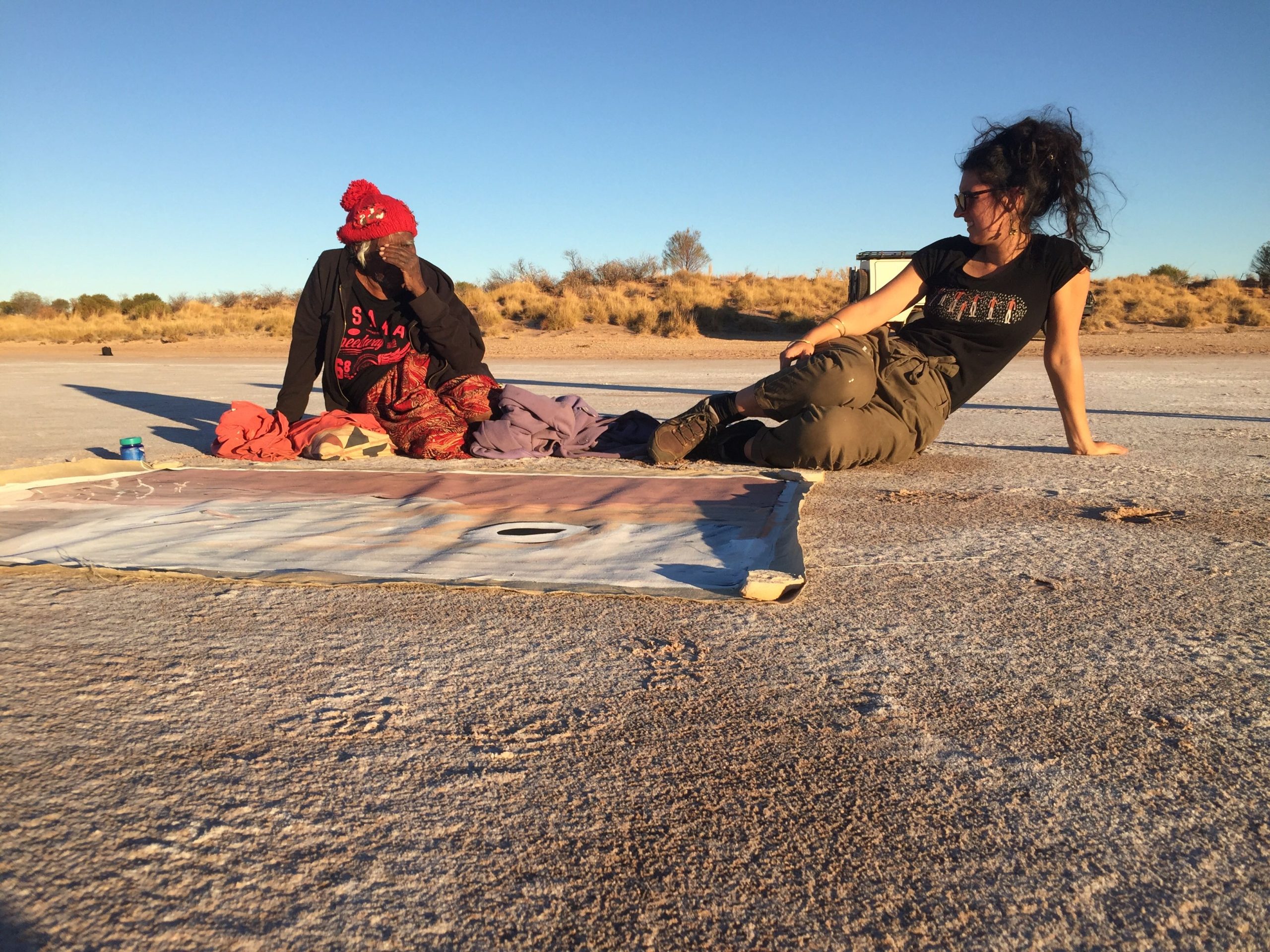
Spend as much of your spare time as you can hunting with people.. I learned a lot going hunting – to sort of slow down and listen. [For me] it was a way of… experiencing some of the Country that people were creating in their artworks, to pay attention, be present, hear things, feel things It’s a privilege to do.
And make an effort to learn some language.
After leaving Martumili you became CEO of the Indigenous Art Code – a position you still hold. Do you have any reflections on the time since?
I often reflect on how I ended up at the Code. And there’s no way I could do my job at the Code if I hadn’t worked at Martumili Artists… without what I learned there.
Martumili was a smaller organisation back then—it has been 20 years, after all. But what has remained constant is the artists: their vision, culture and commitment have always been at the heart of Martumili. The arts workers carried so much and also provided vital continuity, carrying knowledge and keeping those relationships strong over the years. Alongside that, having only three managers in that time reflects thoughtfulness and a lot about the continuity and shared commitment to succession planning. Because it has always been about supporting the artists and being part of a very special organisation.