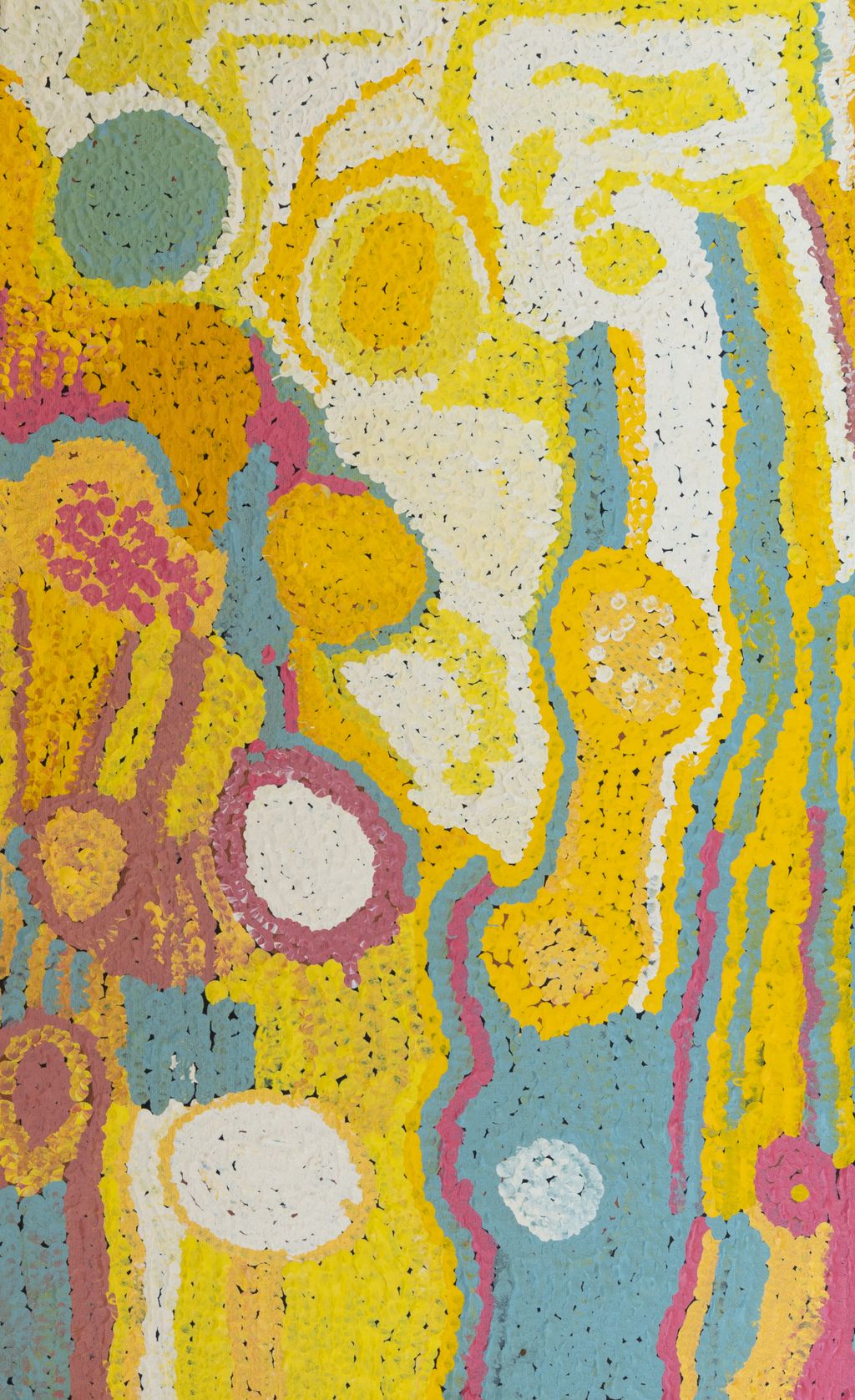
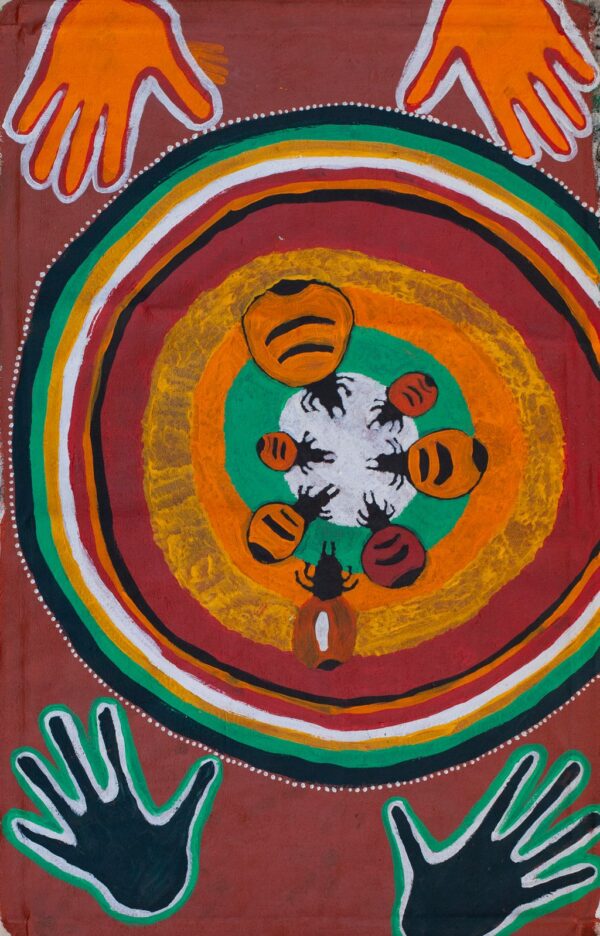
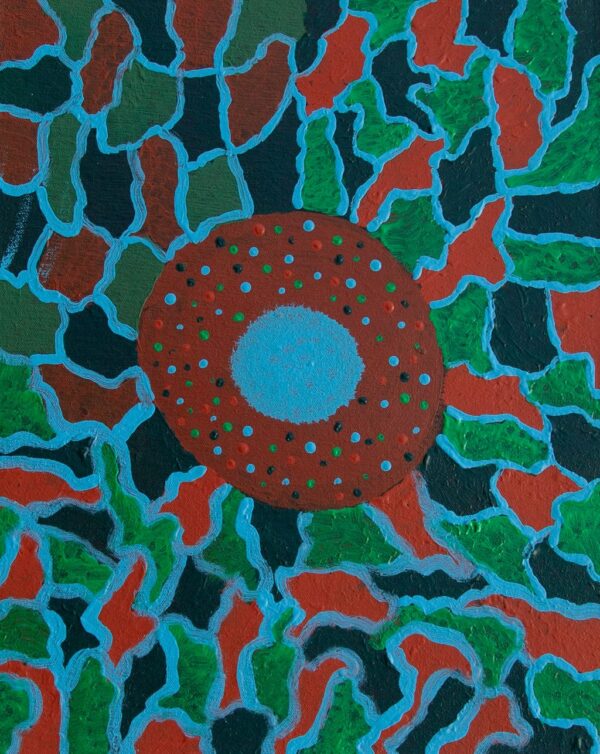
Ngamaru Bidu Acrylic on Canvas 46 x 76 cm Year: 2026 26-608
Kulilu
“[As a young girl] I walked around and went east back to my dad’s area, to Pitu, Kulilu, Nakaly and Kunapila. Then I was a teenager.”
– Ngamaru Bidu
Kulilu is a rockhole and soak located yulparirra (south) of Wuranu (Canning Stock Route Well 29) and just slightly kayili (north) of Pitu (Separation Well). Kulilu forms part of Ngamaru’s ngurra (home Country, camp). She grew up in this area; she knew the region intimately and travelled around here extensively with her family in her youth. At this time Ngamaru’s family would regularly meet around here with fellow Martumili Artists, Bugai Whyoulter, Jakayu Biljabu, and their families.
During the pujiman (traditional, desert dwelling) period, knowledge of water sources was critical for survival, and today Martu Country is still defined in terms of the location and type of water. Each of the hundreds of claypans, rockholes, waterholes, soaks and springs found in the Martu desert homelands is known by name, location, quality and seasonal availability through real life experience and the recounting of Jukurrpa (Dreaming) narratives.
Soaks, or soakwaters, derive their name from the manner in which their waters generally seep into the sand from below stores, sometimes as part of an ephemeral river or creek. Soaks were an especially important source of water during the pujiman era, being the most dependable water source in times of drought. Water was obtained from soaks by scooping away the sand with a piti (timber bowls used for carrying food and water) until clear water gathered at the base of the hole, sometimes at a depth of several metres.
Martumili Artists warns visitors that our website includes images and artworks of Artists who have passed away which may cause distress to some Indigenous people.
Martumili Artists acknowledges the Nyiyaparli and Martu people as the Traditional Owners of the land we live and work on. We also acknowledge the Traditional Owners throughout our country and our Elders; past, present and emerging.