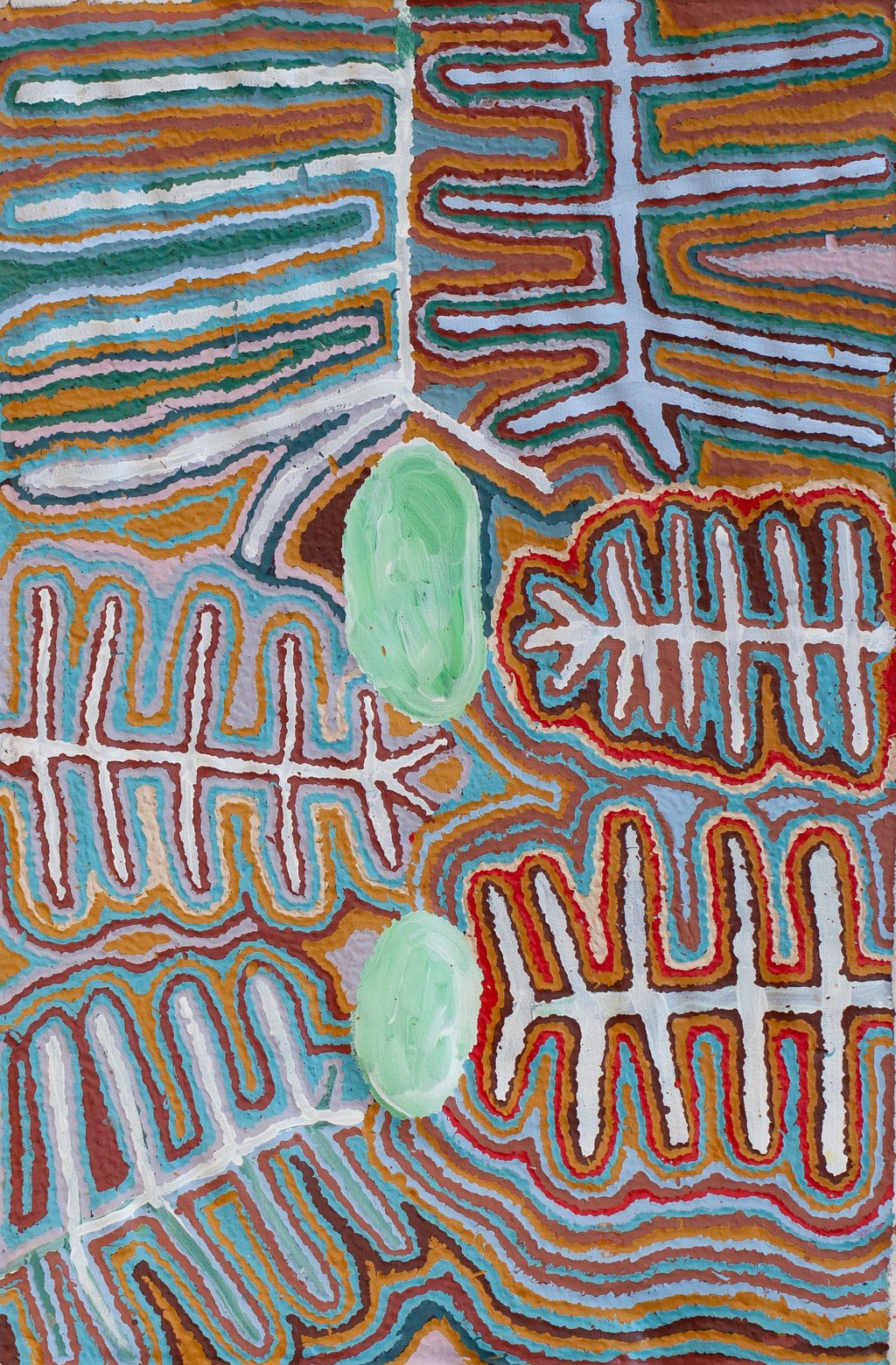
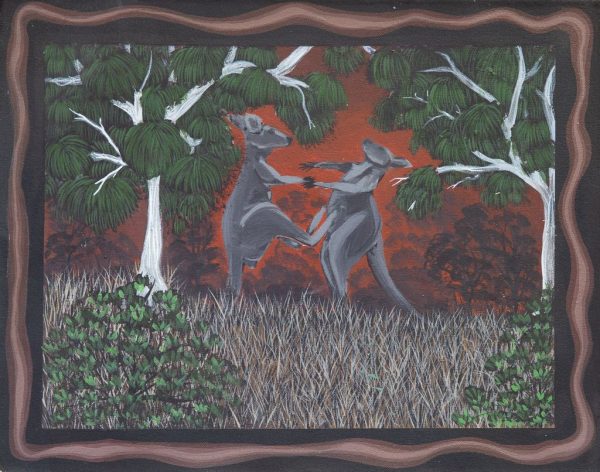
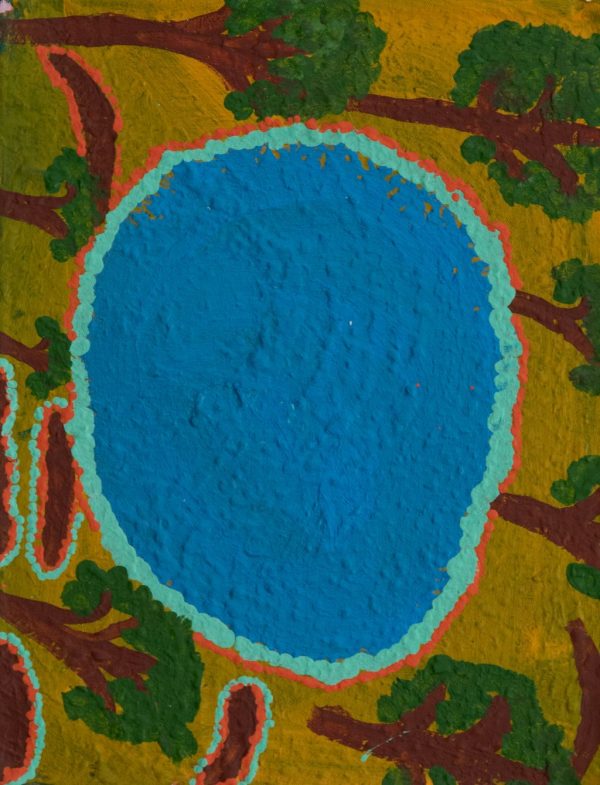
“This Warnanjarra, my ngurra (home Country, camp). Warnanjarra is a big kalyu (water), big claypan area in Karlamilyi (Rudall River) Country. This painting is my ngurra, and all the green grasses and warta (trees, vegetation) around my ngurra. All the claypans everywhere here. After rain, you go and have a drink from there, from the claypan. Maybe set up ngurra, maybe have some dinner.”
– Kanu (Karnu) Nancy Taylor (dec.)
Warnanjarra refers to a series of claypans located at the south western border of the large salt lake, Nyayartakujarra (Lake Dora), within the Karlamilyi River region. Warnanjarra is at the northern end of the epic Karlamilyi River, and the site at which the river submerges below ground as an arterial body extending all the way north to Derby. Warnanjarra lies within Karnu’s ngurra, and formed part of the area which she knew intimately and travelled extensively with her family in her youth.
During the pujiman (traditional, desert dwelling) period, Martu would traverse very large distances annually in small family groups, moving seasonally from water source to water source, and hunting and gathering bush tucker as they went. At this time knowledge of water sources was critical for survival, and today Martu Country is still defined in terms of the location and type of water. Each of the hundreds of claypans, rockholes, waterholes, soaks and springs found in the Martu desert homelands is known by name, location, quality and seasonal availability through real life experience and the recounting of Jukurrpa (Dreaming) narratives.
Martumili Artists warns visitors that our website includes images and artworks of Artists who have passed away which may cause distress to some Indigenous people.
Martumili Artists acknowledges the Nyiyaparli and Martu people as the Traditional Owners of the land we live and work on. We also acknowledge the Traditional Owners throughout our country and our Elders; past, present and emerging.