

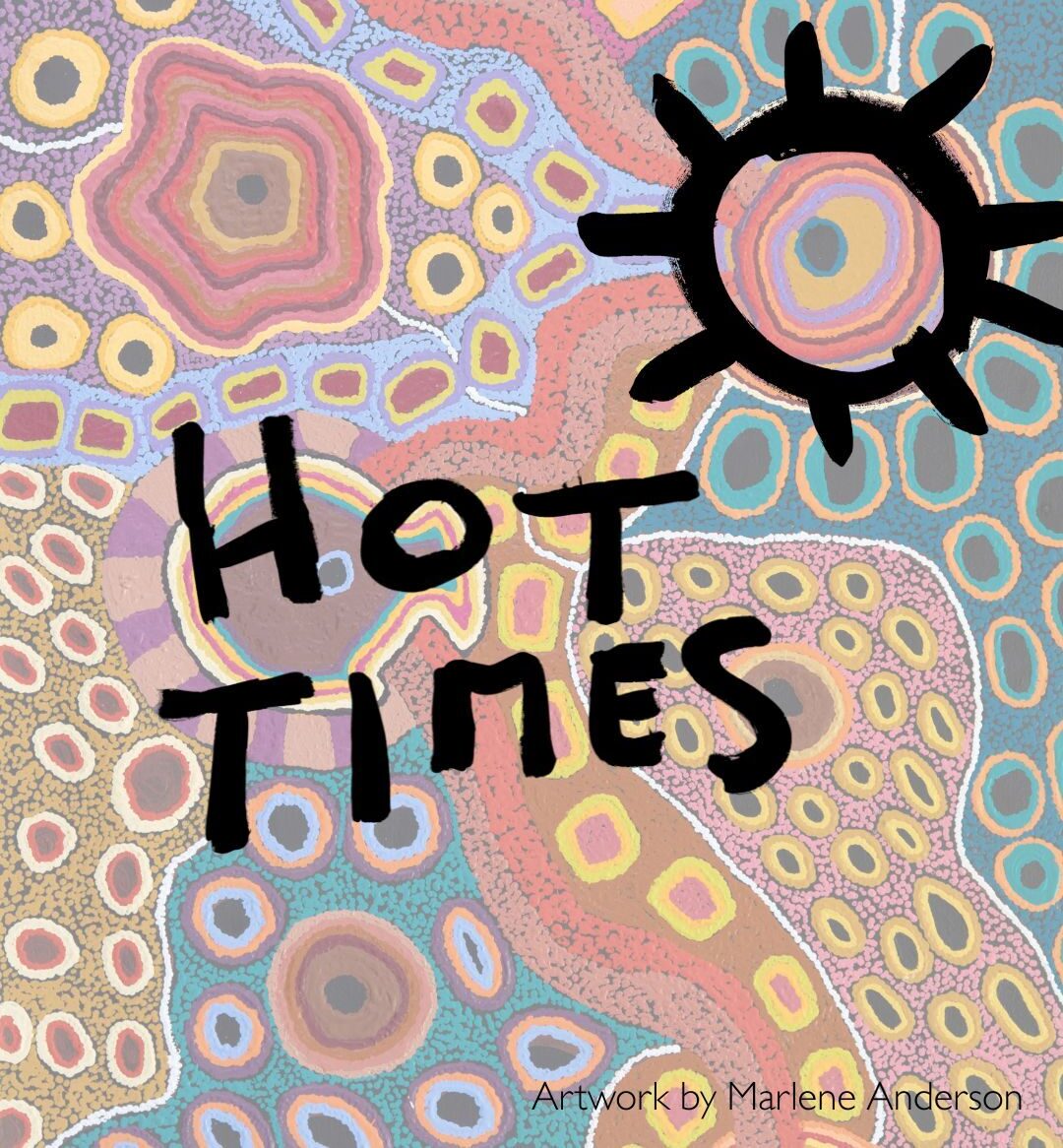
Now open at Martumili’s Parnpajinya (Newman) Gallery is Hot Times, our first inhouse exhibition of the year. Bringing together works by established and emerging Martu artists, the exhibition reflects on the intense hot season- running
approximately from November through to February- from which the Western Desert region is just beginning to emerge.
In the Martu calendar, seasons are not defined by fixed months but by environmental shifts and corresponding changes in the movements, habits and appearance of animals and plants. The period known as puyulyurru or yalijarra (Hot Season/ Summertime) is characterised by extreme heat, mostly dry conditions and harsh sunlight. Temperatures often exceed 40 degrees across the Western Desert. Willy willys dance across the land, occasional yet intense electrical storms strike, vegetation turns crisp and golden, and goannas become skinny and increasingly mobile in the search for food.
Traditionally, puyulyurru/yalijarra was a time when Martu families would move between yintakaja—permanent waterholes—following the availability of water, plants and animals. Seeds and bush tomatoes were gathered, goanna hunted, and
important cultural obligations like the Lore season were carried out. While some elements of these cultural and social activities remain the same- in particular the staging of Lore gatherings and rituals- the ways in which travel and community activity respond to the heat has changed. During the heat of the day the pace of life slows, and Martu mostly stay cool indoors or else visit family in coastal communities such as Bidyadanga, near to Broome.
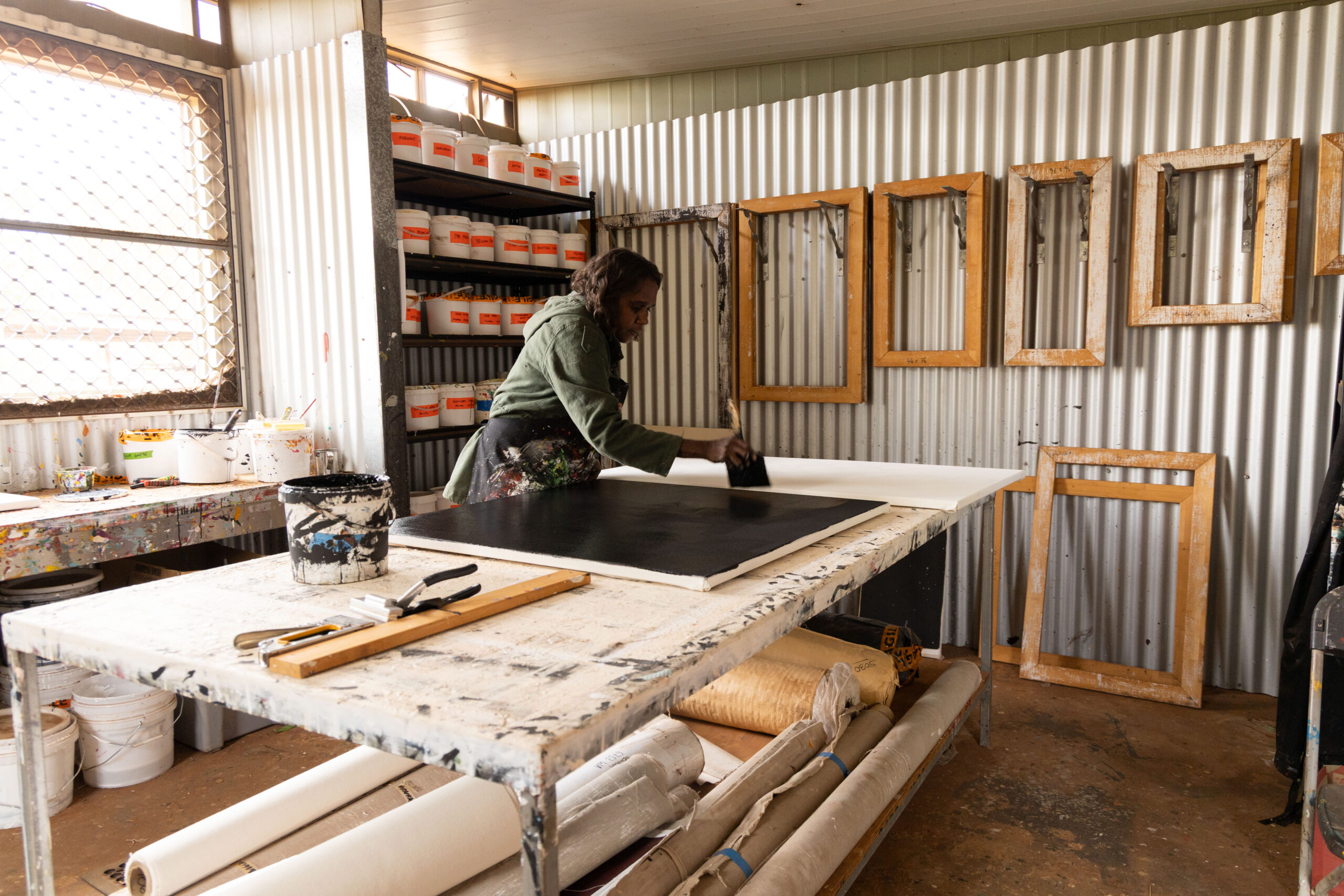
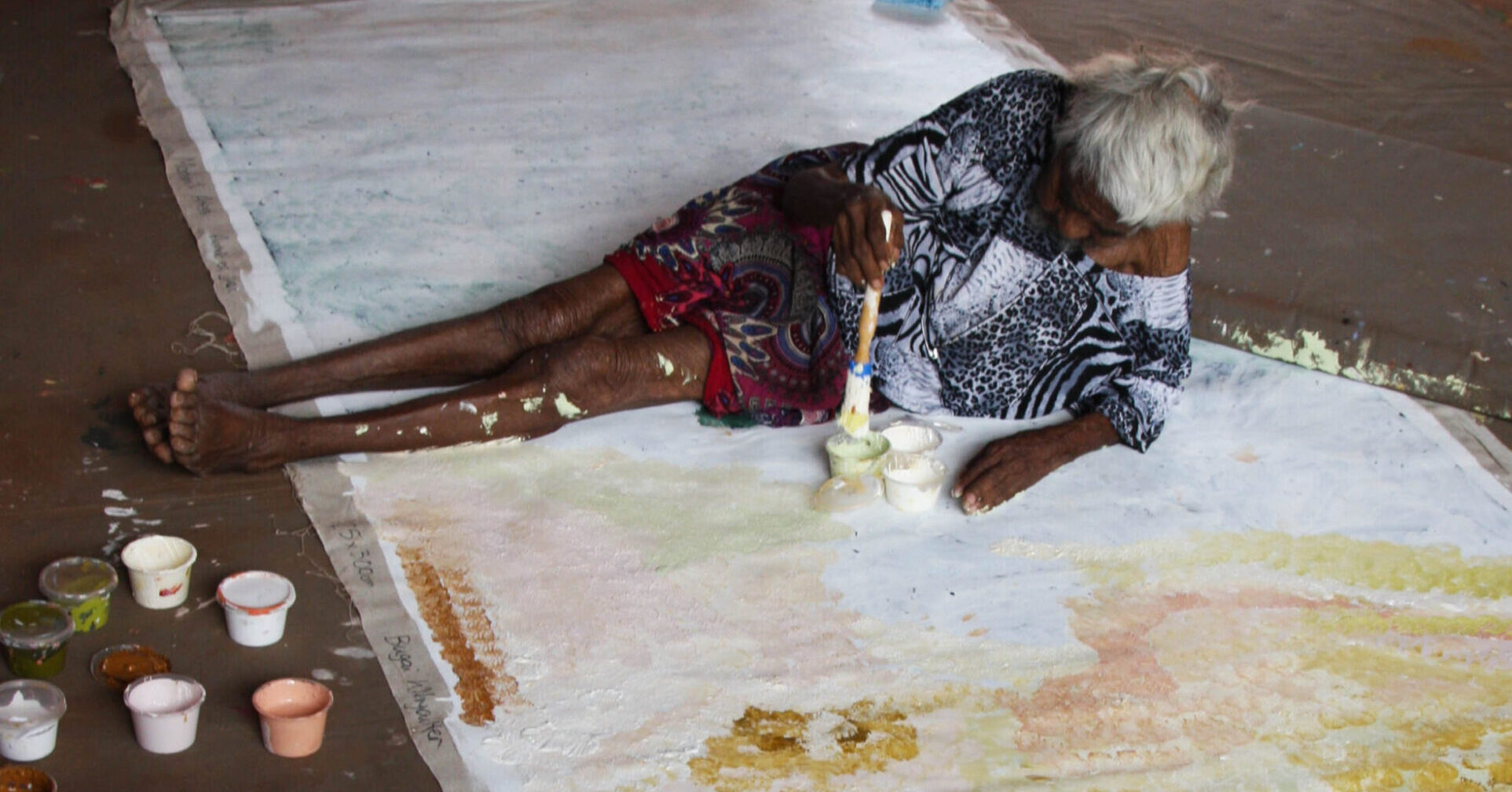
For Martumili artists, the Hot Times also brings a change in creative pace. While the Newman Studio and Gallery closes for part of the summer and Field Officers take their ‘off-season’ break, many artists continue painting at ngurra (home camp, home Country) in the cool of air-conditioning or during the evening hours. In these quieter conditions, artists have the opportunity to spend longer working on their paintings, revisit older works, or create larger than usual pieces.
Artist Marlene Anderson reflects on this approach: “Just want to sit and paint, peaceful, quiet, where I can think what colour next to put on… I sit for a while, I go long distance and I look. Thinking my painting never sold so I’ll take it home and sit and look at it, think in my head, replace what’s missing in it.” Over the recent break, she reworked earlier paintings that had not yet sold, transforming these works by adding a new layer of intricate details, resulting in striking depictions of the Mungili Waterholes in her home Country.
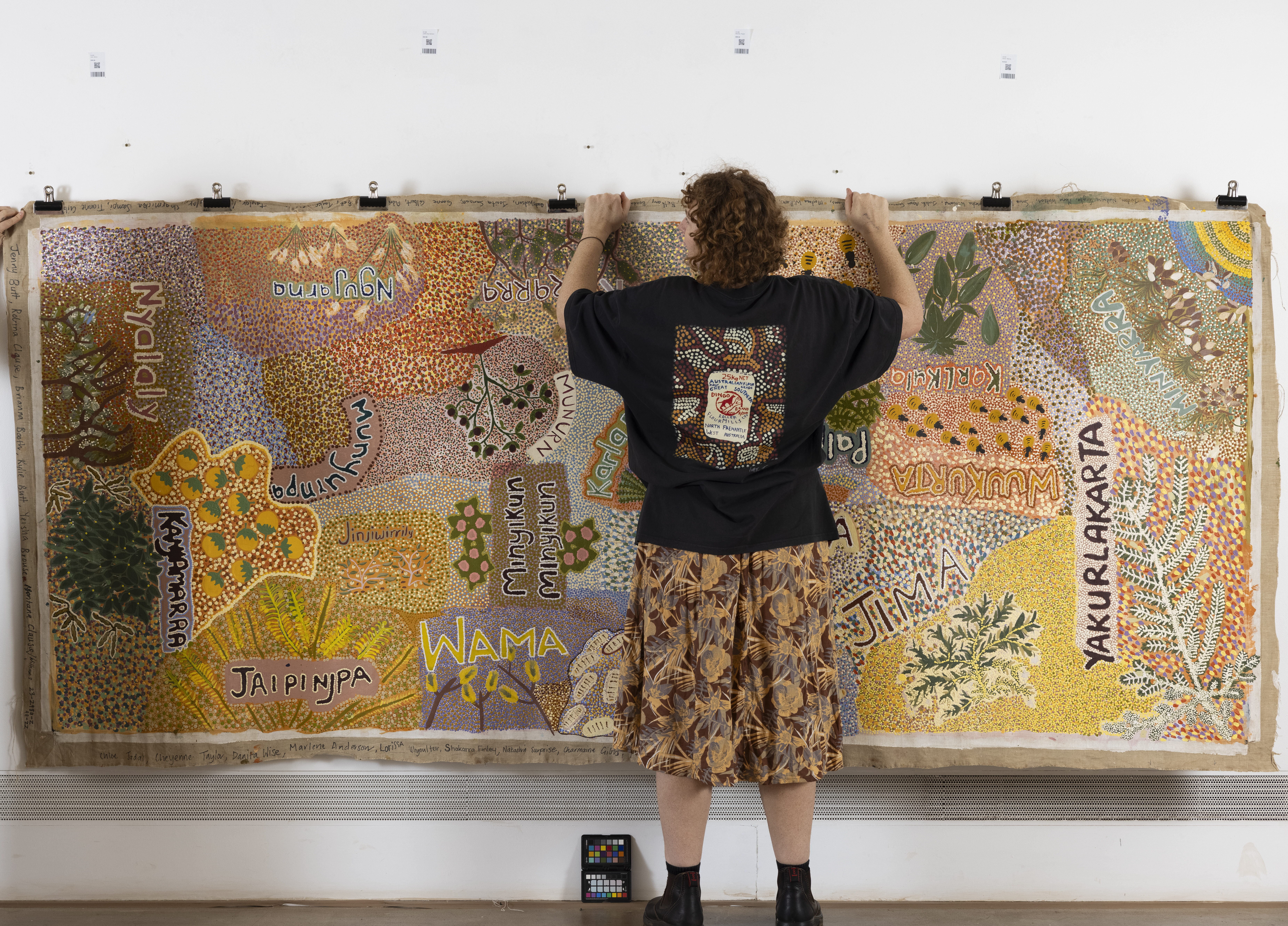
Across the exhibition, artists have responded to the season in different ways. Some– like Levina Biljabu’s ‘Nyilangkurr’, Marianne Burton’s ‘Punmu’ and Mayiwalku May Chapman’s two untitled works- portray waterholes and landscapes in vibrant pinks, oranges and yellows that echo the heat of the summer sun. Others, such as Ciarn Dean-Bullen’s paintings of her home community near Bidyadanga, Rollah, and her delicate ‘Water Flow’ works, use cooler blues and greens to evoke the presence and movement of water.
Still more works depict figurative scenes of camping trips and community life. Together they capture the many ways Martu people experience and respond to Hot Times, offering a vivid glimpse into life during the Western Desert’s most intense season, and celebrating both the resilience of Country and the creativity of the Martu artists who continue to paint its stories.
Hot Times is open at Martumili Artists’ Parnpajinya Gallery until 20 June.
Words by Ruth Leigh.